Sunday, March 17, 2013
Retro camping fan?
I recently got an email from the folks at On The Mountain, who wanted to show me their collection of 70s camping and hiking photos available as greeting cards. I don't know what it is about the 70s, but everyone in pictures from that era just seems to be having such a good time!
It was an era before Gore-Tex and hydration bladders - when you were happy plunging your water bottle into the nearest stream and you didn't check the UV index before you left home. But those external frame backpacks don't make me nostalgic - they look uncomfortable.
They have both summer and winter scenes, reproduced from pictures taken in America's national forests. Not only are these fun, but part of the proceeds goes to support charities that protect these forests for future generations.
Other items on the website include camping pillows and forest-inspired notebooks.
So if you're the sort of retro-loving person who still writes notes on actual cards (we're a dying breed these days) have a look. It will remind you of the days when your camping trip pictures were a mystery to be discovered about a week after you got back from your trip and had them developed at some shack in the mall parking lot. Remeber that? No? Well, that's what people used to do in the 70s kids! Unless you had a Polaroid...
Sunday, February 10, 2013
No such thing as bad publicity
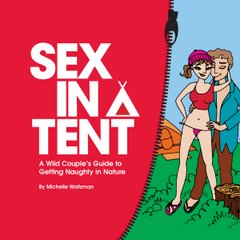
The Huffington Post is one of those online neighbourhoods where it's very fashionable to be spotted. So when I was told that Sex in a Tent had been featured in a post there, I was feeling very smug indeed.
The fact that it's on a list of "18 Sex Books with Unusual Covers" works for me. After all, Valentine's Day is just around the corner and nothing says "I love you" like a sex book with an unusual cover.
Read the post here.
Have fun celebrating with your loved one, in whatever way you choose! (Even if it involves sock moneys.) If you don't yet have your copy of Sex in a Tent - they're ready for shipping at Amazon.com or Barnes & Noble!
Tuesday, December 18, 2012
Trail running with a purpose - read about Mal Law's amazing journey
If you've been reading this blog for a while, you will have seen my posts about Mal Law and his incredible "7 in 7" trail running fundraisers for Leukaemia & Blood Cancer NZ.
Well Mal has put together a book documenting his idea for raising money as a tribute to the brother he lost to cancer, his training for a gruelling challenge of running New Zealand's seven Great Walks in seven consecutive days, and the event itself.
If you're unfamiliar with the Great Walks, most of them are normally hiked over 4 or 5 days, so running each one in a day (and doing this seven days in a row while travelling all over the country) is a phenominal accomplishment! My knees ache just thinking about it.
Mal is still running like crazy these days. If you're into trail running, check out his Running Wild website for inspiration! (Or maybe cautionary tales?) You can also put in advance orders for his book One Step Beyond via the website. It's available from March 1, 2013.
It's not available on Amazon yet, but hopefully Penguin will get it there soon!
Saturday, January 14, 2012
Book Review: Te ARAROA: A walking guide to New Zealand’s long trail
Long hiking trails capture the imagination of many, but few of us ever manage to make the commitment (physically, mentally and financially) to complete a route like the Appalachian Trail, the Pacific Crest Trail or the Haute Route through the Pyrenees. These trails are the gold standard for long distance hikers, and now New Zealand has finally joined that elite club.
Te Araroa is a route that allows hikers to literally walk the whole of New Zealand, from the lighthouse of Cape Reinga at the northern tip, to the iconic signpost of Bluff in the far south. It’s a 3,000km journey through a huge variety of landscapes and conditions, and clearly not for the faint of heart.
The route has been a long time in the making, but was finally “officially” opened a few weeks ago. To coincide with this, a guide book has been published as a companion to the trail.
Random House was nice enough to send me a copy of the book, so this is actually a two-fold review; first a book review and second a review of the trail itself.
About the Book:
Te Araroa was written by Geoff Chapple, who has played a huge role in the struggle to make the trail a reality. Geoff likely knows more about this trail than anyone else on the planet, so who better to create the guide!
The book is not something you would use while actually hiking Te Araroa – but more likely as inspiration, background and planning material. The maps in the book give you a good idea of the route and topography of each section, but are not detailed enough to use for navigation. The book is also heavy and glossy, and as all through-hikers know, every ounce counts!
The book begins with a bit of background on hiking and trails in New Zealand, before outlining the long history of the creation of a national trail. It also provides general advice about tramping in New Zealand, about how long a through-hike is likely to take (120-160 days), and about the best times to plan a long section or through-hike.
There is also a good summary of the trail’s shortcomings, such as sections which are not quite complete and where a detour is necessary, as well as trailheads on the opposite banks of large rivers where crossing directly is not advised.
The rest of the book takes readers through the route region by region and section by section. This is especially useful for section hikers or even day hikers as each section includes notes on distance, difficulty, campsites and/or huts, and start and end points. Directions to the nearest road end or town are often included. Each seciton also refers to map numbers. These are maps available to download from the Te Araroa Trust (TAT) website. It would have been helpful to also include Land Information New Zealand topographic map numbers, as many Kiwis already have these and could use them instead of downloading and printing the TAT maps.
Each section includes a 3D map showing the route as well as any roads it crosses or approaches. Lots of colour photos help readers to get a look at the terrain and scenery in different parts of the country. Descriptions of the route give readers an idea of where they need to go, what to look out for, and what the terrain will be like. Historical and cultural information rounds things out and gives readers more context about the trail and New Zealand in general.
As with any guide book, it can never be accurate for long. Trails change, accommodation providers come and go, and information is only reliable for a short time. But the book acknowledges this and encourages readers to check the TAT website for updates before setting out.
Overall, Geoff Chapple’s book is an excellent first resource for anyone planning to walk New Zealand’s long trail, Te Araroa. If you’re a dedicated through-hiker, it will get you inspired and starting to plan your timing and logistics. If you’re a section hiker or tourist, it will help you to find walks that suit your skills and the kinds of landscapes you’re hoping to experience. And for anyone who has walked the trail, it’s a great, colourful souvenir.
While widely available in New Zealand, the book does not appear to be stocked by Amazon.com or Barnes & Noble according to their websites (although Chapple’s 2003 book also titled Te Araroa is available, so don’t be confused.) To purchase from outside NZ, ask your local retailer or buy online (there will be international shipping charges) from www.fishpond.co.nz or www.mightyape.co.nz.
About the Trail:
Like so many outdoors enthusiasts in New Zealand, I have been waiting and hoping that Te Araroa would one day be a reality. Seeing the the trail officially opened made my heart sing. But Te Araroa is unique among long trails in many ways – and while some will love these differences, others may be disappointed. Let me be clear that I have not walked Te Araroa (except a few short sections) so don’t rely on my review as a planning tool.
The first potential issue people will point out is that the trial is not completely in wilderness. It passes through towns and cities as it goes. This makes resupplying and using a “bounce box” easier, as you don’t have to leave the trail to find supermarkets, outdoors suppliers, post offices or whatever else you need. But this does mean that it’s less of a total escape from civilization than something like the Appalachian Trail. I personally feel there’s too much roadside walking included in the route, especially on the North Island. But this may decrease as more connecting trails are completed over time.
Also, it’s not a hike all of the way through. The official route includes a paddling section along the Wanganui River. This may not appeal to everyone, and adds the complication of renting a canoe and arranging for it to be dropped off and picked up. Some through-hikers, however, might enjoy the variety this provides. Others may deviate from the planned route and find a way to cover the distance on foot.
Accommodation options are a bit spotty along the full route. In many cases, New Zealand’s excellent back country hut system provides plenty of shelter. In some areas, however, there are no huts and it will be necessary to pitch a tent or tarp. Then of course there are the towns and cities, where you may need to find private accommodation for the night. If the trail gains enough popularity, I suspect locals will start offering cheap places to pitch a tent, or bunkhouses on their farms or something. Huts are quite plentiful along the South Island portion of the trail, so through-hikers may be able to stop carrying a tent (but always carry some emergency shelter) after completing the North Island.
The trail mostly follows marked tracks so moderately skilled and fit trampers should be able to complete the trail. There are a few sections labelled as “routes” meaning that there may not be markings along the way and map and compass navigation skills are likely needed.
Te Araroa is an amazing accomplishment and mostly due to the efforts of tireless volunteers who believed they could make it happen. New Zealand has some of the most diverse, beautiful and breath taking wilderness in the world, and to be able to see the entire country on foot is a privilege many of us would love to experience. While I don’t see a 3000km through-hike in my future, I do hope to chip away at it bit by bit as time allows.
For detailed information about Te Araroa, including maps, trail notes, advice and much more, visit www.teararoa.org.nz.
Friday, September 23, 2011
Sex in a Tent - Very Funny Review!
The guys over at Camping Gear TV have reviewed Sex in a Tent. It's definitely R18, so don't watch in front of the kiddies! These guys reminded me of a Wayne's World skit, or maybe even Great White North (for those who remember SCTV).
Anyway, it's pretty entertaining, and apparently the drawing of me at the back of the book looks like Jennifer Grey (pre-nose job) - which I'm taking as a pretty good compliment!
Sit back and enjoy :)
http://campinggeartv.com/2011/09/sex-in-a-tent-a-book-review-for-adults-only-episode-238/
Saturday, March 19, 2011
Book Review: Little Princes

Normally I limit my reviews on this blog to books, movies or products directly related to outdoor recreation or outdoor adventures. I have made an exception for Little Princes, a memoir by Conor Grennan.
The book slipped into my review list because it is about Nepal, a country so much a part of the hiking and climbing collective consciousness that I can't imagine the outdoors enthusiast who hasn't either visited the country, or put it on their bucket list. (Unfortunately I am still in the latter category.)
When Conor Grennan arrived in Nepal he volunteered at an orphanage thinking it would make his trip around the world sound less self-indulgent. In the end it became a life-changing experience.
This book is inspirational in many ways. When most visitors walk the streets of Kathmandu and see the poverty of the local children, the vast majority think "what a shame" and carry on with their lives. Conor Grennan learned about what was happening to children in Nepal, thought "what a shame" and then thought "I'm going to fix this!"
His efforts to protect trafficked children and reunite them with their families is a testament to what a few determined people can do if they set their minds to it. He had no training for this, no background in international charities, fundraising, politics, or any of the skills that you would think necessary for such an undertaking. His success is simply a story of willpower overcoming self-doubt. He set up a children's home, trekked through isolated valleys into remote villages to locate families, and stood up to powerful traffickers on behalf of those who could not.
So the next time readers of this book see something and think "what a shame", perhaps some of them will also think "I'm going to fix this!" because if Conor Grennan could do it - why not the rest of us!
Thanks Conor, for opening my eyes to the power of just getting on with it!
Little Princes: One Man's Promise to Bring Home the Lost Children of Nepal is not just a memoir - it is also a fundraiser for the charity Conor Grennan created to support this work. So buying this book is one small thing you can do to help. Or you can cut straight to the chase and visit the website for his charity Next Generation Nepal, and make a donation there.
Saturday, October 02, 2010
Review: Katadyn Pro Hiker Filter

I must admit to becoming a bit spoiled as a tramper in New Zealand. Like many other Kiwis, I tend to rely on rainwater collection tanks at the backcountry huts for my supply of clean drinking and cooking water. Most huts have these tanks, and since the NZ backcountry is rarely hit with drought conditions, the tanks are not often empty.
However, when tenting away from the beaten track, or on the rare occasion when rainwater is not available, trampers here do need a backup method of getting their water supply. In the past, we have used either boiling (the most reliable method, but you use a lot of extra fuel) or purification tablets.
Last weekend, I was able to test drive a Katadyn Hiker Pro water filter, something I haven't used since I relocated to NZ. I got a review one from allfilters.com, who sell all kinds of water filtering equipment for both home and away. They only stock Katadyn filters, and I wanted to give the Hiker Pro a try because a) it's under $100 which makes it reasonable for most backcountry campers to add to their gear collections, and b) it's reasonably small and lightweight (11 oz.) so it's not a burden to bring along on a trip. It also claims to get up to 750 litre (200 gallons) through the filter before it needs replacing, which seems like good value.
What makes this mode the 'pro' version is that it has extra attachments to connect the filter to either a widemouth Nalgene bottle or a hydration bladder. Being a bladder-user myself, I thought this was a good feature. Unfortunately it doesn't connect to ALL bladders, just certain brands that have a quick connect fitting built in. So no easy connection for me. Even my Nalgene is a narrow mouth!
The initial set up was relatively straightforward and the instructions easy to follow. I pre-cleaned the filter as instructed by pumping about a litre of water through it before we left home. This cleaned the dust out of the filter (which was clearly necessary!)

I took the Hiker Pro out to one of our favourite spots in the Catchpool Valley on a lovely spring day. I stopped next to a running stream and gave it a go.
It was easy to pump, and quickly filled my bottle. Their fill rate of 1 quart (1 litre) per minute seems accurate. The water tasted great, and 24 hours later my tummy is just fine so it must have worked!
There is a good pre-filter at the end of the intake hose which keeps the filter from getting gunked up with leaves and other large particles.
They also supply you with a separate carrying baggie for the output hose, to keep it from getting cross-contamination when carried with the rest of the filter. Everything fits in a small, nylon pouch which packs well.

The Hiker Pro has a 0.3 micron filter. This is small enough to remove bacteria and protozoan cysts like Giardia. It will not filter out viruses, so if your water supply is likely to have viral contamination you should still boil it as a precaution.
This is not the smallest or lightest water purification you can buy, but unlike a Steripen you don't need to rely on batteries, unlike purification tablets it doesn't make the water taste strange, and unlike boiling you don't need fuel or fire. If I'm going somewhere with a questionable water supply, I will definitely be bringing it along.
Friday, September 10, 2010
Food to Go - a backpacking cookbook

Frank and Sue Wall, who run the popular Australian blog Our Hiking Blog recently released an e-book about eating well on the trails, co-authored by Sue Hadskis.
"Food to Go" is a bit different from other backpacking cookbooks. What I found unique about it is that it caters to a wide variety of ways to eat on a multi-day trip, rather than focusing on making dehydrated meals from scratch. It does cover recipes for such meals, but let's face it, there are a lot of backpackers who never cook from scratch when they're eating at home, and aren't about to start just because they're going on a trip!
There is a section comparing various pre-packaged freeze dried meals. These are growing in popularity, and it's nice to have some first-hand accounts regarding portion size, flavour and texture. While I wouldn't use these meals while hiking locally, I can see it being a good option if you are far from home and don't have access to a kitchen.
They also discuss dehydrating techniques at length, including examples of how to dehydrate a take-out meal for your trip. Brilliant! Even if you have no idea how to make a curry, you can buy one from your favourite restaurant, dehydrate it, and eat it at camp. Ditto your favourite stir fry or pad thai.
If you're willing to do a bit more work, there are also recipes which include the use of pre-packaged sauce mixes and other convenient ingredients. And of course for the purist there are recipes from scratch for both omnivores and vegetarians.
The book also includes sample four day menus from a variety of outdoors enthusiasts, myself included. It's quite interesting to see what different people like to eat on their trips. I know that when I'm at tramping huts in New Zealand, I'm always fascinated to see what other people are having for dinner. I think my biggest surprise was when some friends started cooking up garlic shrimp! (Granted, it was a one night trip.)
Food to Go costs $19.50 Australian - which is around US$17.50. You can download the pdf HERE.
Frank and Sue also have an e-book about hiking Tasmania's famous Overland Track - so if you're heading down under you may want to check that one out too.
Saturday, March 27, 2010
Book Review: Every Day's A Good Day
Here in New Zealand, we are sometimes a bit blasé about using active vocanoes for our recreational activities. Mt. Ruapehu has had fairly major eruptions as recently as 1996, but we continue to ski, climb and hike on it year-round.William Pike is a Kiwi who found himself in just the wrong place at the wrong time. During a climbing trip with a friend on Ruapehu in 2007 they stopped for the night at Dome Shelter, a small hut just below the crater lake. That night, the mountain had a severe case of indigestion and sent a lahar (powerful stream of mud and rocks) straight through the hut on its way down the mountain.
William's companion was miraculously unhurt, but William was blasted by rocks, and had one leg pinned in what amounted to natural concrete. Every Day's a Good Day is the story of William's ordeal on the mountain, rescue, and recovery.
I really wanted to like this book, because I admire those who take such a major setback in their lives (in the case the amputation of his right leg below the knee) with such acceptance and optimism. Throught the story, William never seems to feel hard done by with his extreme bad luck, despite being the ONLY person hurt by the eruption. Nor does it alter his love of the outdoors or of mountaineering. There's no doubt that faced with similar circumstances, I would hope to find that kind of strength and positive attitude in myself.
Unfortunately, William is not a particularly strong writer. Although his story is compelling, he fails to make the readers feel like they are living through it with him. It also seems that he couldn't find enough to say about the actual incident to fill out a book, so instead he tells us irrelevant stories about his childhood firing a pea-shooter and his youth on the school water polo team.
Coincidentally William has just been in the news here again. (No he hasn't lost another limb!) He has just launched the William Pike Challenge Award for students. Participants will do a mix of community service, such as helping clean up ski areas, and take part in outdoor activities such as climbing the central plateau mountains, Ruapehu, Tongariro and Ngauruhoe.
William is a school teacher and wanted to encourage more young people to gain new skills and confidence by participating in outdoor activites. Good on ya William!
Tuesday, December 15, 2009
Movie Review: North Face (Nordwand)

Back in the early 1930s, the North Face of the Eiger was considered "the last great problem of the Alps". The Nazi government was desperate for a German climbing team to be the first to conquer this daunting climb, especially with the world's eyes on them for the Olympics.
North Face is based on the true story of a pair of German climbers, Toni Kurtz and Andreas Hinterstoisser, who were among several teams of climbers vying for a place in history.
After perhaps a bit too much lead up, the film follows Kurtz and Hinterstoisser, and an Austrian pair hot on their heels, as they head for the summit. From the luxury hotel facing the famous mountain, German press and curious tourists watch through telescopes and binoculars. Then the accidents and injuries begin, and the weather changes for the worse.
While the screenwriter has added a love interest to the story that likely never existed, the rest is quite believable. The scenes of the climbers struggling in a blinding blizzard make you feel the cold through your bones. You are kept on the edge of your seat as the drama unfolds, hoping against hope for a happy ending.
If you aren't familiar with the story, I won't ruin it for you. Let's just say there's a good reason that Hollywood has never taken up this particular story on the big screen. It took a German director to tell this very German story with the honesty it deserves.
North Face (or Nordwand in the original German) is doing the art house circuit - and can already be found on DVD in some countries. If you like mountaineering dramas like Alive or Touching the Void, this is worth a watch.
Tuesday, December 08, 2009
Book Review: One Step Beyond
Warren MacDonald's autobiographical book is actually about 10 years old, but I picked it up at my local library recently and thought I'd share my thoughts on it.Warren was an Australian conservationist and wilderness guide. On a holiday in Queensland he headed over to Hinchbrook Island and after meeting a Dutch tourist decided to accompany him on a climb up the remote Mt Bowen.
This was meant to be a challenging but short trip. Instead it led to a life-changing accident. After losing the trail, Warren and his companion made camp for the night on a flat rock beside a creek. On a quick excursion to relieve himself on the other side of the creek, Warren dislodged a boulder and found himself pinned under it in the creek itself.
The book details the night they spent trying at first to free Warren's legs from the boulder, and then trying to keep him safe and warm until his companion could go for help in the morning. It then goes on to the (seemingly interminable) wait for help to arrive, and Warren's long road to accepting the reality of what has happened and what it will mean for the rest of his life.
The story is told both from Warren's point of view, and from his Dutch companion's. Getting inside both the "victim's" and "rescuer's" heads is quite interesting. I found myself constantly asking "What would I do?" "How would I deal with this?" "Would I survive something like this?"
This wasn't a glamourous accident on a famous mountaintop. This was just one of those split-second moments that can shatter a life. Luckily Warren didn't let it shatter his - at least not permanently.
While Warren's writing style is very typical Aussie bloke, no frills stuff, he does convey a lot of the emotion of the situation. For anyone who ever wondered what it's like to be on that razor edge between hope and hopelessness, this is worth a read.
Thursday, April 23, 2009
Bear Offers Survival Wear for Men - Autographs for Women
Bear Grylls, for those who don't know him by name or reputation, is the host of "Man vs Wild". He's a former British SAS dude (who had to quit after three years because he broke his back in a parachuting accident) who has become the pop culture face of wilderness survival.
His show has had some flack for being "faked". Yes, there is a camera crew with him at all times. Yes, they scout out the best locations in the area to illustrate various techniques rather than Bear just finding his way out blind. Yes, he's probably not in any real danger during the taping of the shows. It's TV folks. Nobody said stuff on TV really happens the way they show it. If you're entertained, and understand that you shouldn't try most of this stuff if you really are lost, then he has done his job.
As you can see, I find his actions on TV somewhat misleading but defensible. What has really hacked me off though is his new online shop, The Bear Grylls Store. First, there's the tacky factor of a "survival expert" selling outdoor wear of no particularly impressive design. But hey, he's found a way to make some extra cash lending his name to it, so why not.
The problem comes in when you have a browse through the products on offer. For men, there is a range of shirts, fleeces, trousers, jackets etc. Not bad. Then you click on "Women's" clothing. What can the adventurous woman buy from Bear? A t-shirt or a hoodie with his autograph printed across the front! Nothing else. No useful products at all. Apparently survival is not the feminine thing to do. If lost in the wilderness, we should just curl up in a ball and hope that a man (who has been watch Bear on TV) comes to the rescue.
I think it's quite likely that Bear himself has little to do with the shop or what it sells. But when your name is on something, you should be aware of it and make sure it won't come back to bite you in the ass. Bear, if you're out there, fix your shop!
Friday, January 09, 2009
Heading to Tassie? Ebook on the Overland Track
Overland track photo by Rick McCharlesSunday, September 07, 2008
One Woman's Bi-Polar Adventures
Well, what else would you call a book written by a woman who has visited both the North and South Poles? She called it South Pole 2000, but I like my title better!Caroline Hamilton was not an experienced adventurer or mountaineer when she decided she had to see the Arctic. She was a reasonably fit woman with a hell of a lot of determination.
First she set up a relay expedition where five teams of women took it in turns to ski from Resolute in northern Canada to the North Pole. From her descriptions, it certainly sounds like a rough journey, but with each team doing a reasonably short stint it would not seem so bad.
After that she abandoned the relay idea and decided to put together a small team of women to ski from the edge of Antarctica to the South Pole in time for the millennium. (The book is a bit old now.) The biggest challenge, it would seem, was getting the funding in place to make such an expedition possible.
Reading her day-by-day account of the journey itself was my main draw to this book. What would it be like to live in that kind of extreme environment for two months? How would a group of women cope with the repetitive nature of that lifestyle, living in a single tent, trudging over the ice day after day hauling a heavy sledge?
It certainly wasn't problem-free, from a three week weather delay before they could even fly to Antarctica, to a range of physical ailments from a broken tooth to arm, back and leg injuries.
For me, I can't imagine spending that length of time without seeing a tree or an animal anywhere. The lack of landscape in the middle of Antarctica might very well drive me to despair. Two months of constant travel I could probably cope with, but the feeling that every day's surroundings would be almost identical would be very disheartening. (Two months hanging out around the edge of Antarctica watching the penguins and checking out the icebergs, on the other hand, would be awesome!)
The lure of the 'big trip' ebbs and flows with me. Sometimes I love the idea of taking some time out from the modern world and going on a long, simple journey in nature. Whether it's a long-distance hike, cross-country skiing, or maybe even a dog sled! Other times, I think I'd get bored and impatient with the routine of such an expeditions. Eat, move, sleep. Repeat. I think there would at least have to be some variety in the landscape to keep me moving on.
I guess the only way to find out for sure is to give it a try. It won't happen this year, but hopefully someday I'll manage to find out whether I'm a long-distance wanderer or not.
Meanwhile, it was a bit of an eye-opener to read Caroline Hamilton's book. It left me wondering what she has been doing since, because she didn't seem like these trips got the goal-oriented bug out of her system. Instead, I suspect she has taken on other grand plans.
I noted recently that there are plans underway for a group of 8 women from various Commonwealth nations to ski to the South Pole. After reading this book, the think I that worries me most about that upcoming expedition is how the personal relationships will hold up. Eight women from eight different countries and cultures, who will have to live in very close quarters, and trust one another with their lives. Sure it will be a physical challenge, but I think the real issues will surround these women and how they interact.
Friday, August 29, 2008
The World According to Ed
Browsing through the offerings at a charity book fair, I came across an old paperback copy of "Nothing Venture, Nothing Win", Sir Edmund Hillary's 1975 autobiography. I considered boycotting the book due to the very poor title, but decided in the end that I was curious enough to forgive his grammar and give it a read.I was hoping for some insight into what sort of person does the things he did. What were his motivations for climbing Everest when it was still unconquered? After acheiving fame with that, why was he so keen to make the first motorized trip to the South Pole? Was he really the humble, down-to-earth guy that Kiwis make him out to be, or is that a mass delusion brought on by hero worship?
The book did give me a glimpse into Sir Ed's personality. Granted, it was written before his wife was tragically killed in a plane crash, and well before his re-marriage to the widow of his friend Peter Mulgrew. This book was written by a 50-year-old man reflecting on his accomplishments, apparently expecting that his biggest acheivements were now behind him.
The Ed Hillary on these pages is certainly down-to-earth, but I wouldn't call him humble. He was very confident in his physical abilities, and seemed to enjoy nothing more than a challenge to his strength and endurance. In fact, the worse things appeared to get, whether on Everest or Antarctica, the more he seemed to think it was a good day. I guess this is the sort of attitude that gets you to the top of a mountain, or across the barren wastes. When things are hard, you have to look at it as a good challenge, not a reason to call it quits.
He also shows his stubborn streak. He ignores instruction, and when told he can't do something he either does it anyway, or argues with those in authority until they change their minds. This is not a trait you'd find in a humble man - this kind of behaviour requires a large ego. So although I hate to argue with public perception, I don't think it can be denied that Ed Hillary was an egotist.
I don't really fault him for that. He generally used his ego to accomplish positive things, like building hospitals and schools in Nepal. But I think it would have been annoying to work alongside someone who was always sure he was right.
As for the book itself, I can't credit Sir Ed with being a great author. His style is very understated and he often fails to bring his dramatic exploits to life in a vivid way. He practically skims over the ascent of Everest, possibly because he had already written an entire book about that (High Adventure).
All in all, I find it difficult to recommend this book. It's not as compelling as other adventure memoirs I have seen. Perhaps his later autobiography, View From the Summit, has a more interesting perspective. I haven't read that yet, so I can't say. I don't doubt that Sir Edmund Hillary led a remarkable life, but it may be more satisfying to read a professional author's retelling of it.
Thursday, July 10, 2008
Paperback Survival
Whenever I have a look at the Amazon.com bestsellers list for camping (not that I'm obsessively checking my ranking or anything - OK, maybe a little) without fail the #1 book is the SAS Survival Guide.Presumably, this means that a ton of you outdoorsy folks out there own a copy. You've invested in its detailed instructions on how to survive in the most extreme and remote conditions you could possibly encounter. You've studied how to desalinate water if you're lost at sea, how to trap your own food in the woods, and how to make a fire when all of your matches get wet and your lighter falls down a cliff.
What I want to know is - have any of you actually done any of this stuff? Have you set up a snare to catch dinner? Have you succeeded in starting a fire without a flint or matches? Have you found yourself so utterly lost that your normal camping skills just won't cut it?
I find it interesting that so many people feel that they need to learn these techniques. Sure, they could come in handy when all else fails. What I can't quite be sure of, however, is that I'd remember what I learned at the crucial moment. Odds are I won't have the manual with me (OK, I don't actually own a copy, but G does) so it would be a matter of not just reading this stuff, but retaining it. It's a lot to expect of someone who can't remember a new person's name 30 seconds after being introduced! What are the odds I'd remember how to desalinate water?
I guess it would be a matter of "practice makes perfect". So, have any of you practiced your survival skills? Leave me a comment and let me know!
Friday, July 04, 2008
Smooth as Silk
I don't often post gear reviews. Probably because nobody has offered to let me try out gear without actually buying it. (Hint, hint.) But when I do pick up a new toy or bit of clothing, I like to share my opinion, so here I go...Friday, June 27, 2008
Book Review - Outdoor Leadership
Outdoor Leadership is not a new book. I picked it up at a charity book fair recently, and decided it looked interesting. It turned out to be a good choice (unlike some of the other books I picked up at the book fair!)Back in Canada, I used to organise day hikes for small groups. However, I was never really comfortable with the idea of being the "leader" of these hikes. I didn't feel I had the skills or the experience to be a leader in the outdoors. The fact that I have a terrible sense of direction didn't do much to boost my confidence either! Thankfully, my leadership skills were never really tested in an emergency situation. Nobody was ever seriously hurt, and we never got so lost that a bit of backtracking wouldn't fix it.
Outdoor Leadership doesn't teach you about outdoors techniques. Instead, it focuses on what leadership means, and how to apply it to outdoor adventure situations. Even though I don't currently lead trips, I think it taught me a lot of valuable things. First of which was - even if you don't think your trip needs a leader (because it's just a group of friends or a family) that need will become apparent if something goes wrong. It also reminds us that you don't have to be the most experienced, skilled or fittest person on the trip in order to be a good leader.
The book outlines approaches to leadership which help you to improve your planning, keep everyone safe, encourage those who are struggling or not enjoying themselves, keep bad situations from getting worse (or dangerous), and keep the peace when the group disagrees about what to do.
There was a lot of thought and experience put into this advice, not only from the author, but through contributions from other leaders of outdoor pursuits and organisations. Much of the advice is useful in everyday life, as well as the wilderness.
He includes a chapter on women as outdoor leaders, which was one of the reasons I picked up the book. Women still face certain stereotypes when it comes to the outdoors, and often have to fight for the respect of their male peers and group members. But women can be very effective in the outdoors, even those who are not exceptionally physically strong. And women do take a different approach to leading than men, if they believe they can pull it off. Less secure women will often mimic male leadership styles they've seen because they think it's the only way to win respect.
Anyway, the book is well worth reading if you ever take groups out into the wild, whether working for a outfitting business, or volunteering with a hiking club. Even if the only group you lead is your family, you will appreciate some of the techniques for keeping everyone safe and happy, and getting the most out of the trip.
Wednesday, May 21, 2008
Matt Damon Gets Lost
Sunday, April 13, 2008
Book Review: A Blistered Kind of Love
I first heard about this book written by Angela and Duffy Ballard while I was doing research for Sex in a Tent, and thought it would be great to interview the authors to get their stories and advice for other couples. Sadly, I never quite got around to doing that - or reading their book, since it was not available anywhere in New Zealand. So when G asked me if there was anything I'd like to add to an order he was placing through Amazon.com, I jumped on the chance to finally check out A Blistered Kind of Love.