Showing posts with label Gear. Show all posts

Saturday, March 23, 2013

Lovely Links

OK, the arrow points the wrong way. Links are actually on the right >>>

I've taken a long overdue look at the links on this blog, and done away with the ones that are no longer active while adding a couple of new sites worth browsing. So once you're done exploring the wonderful posts here at Love in a Tent, have a glace down the right hand side of your screen for some other good outdoorsy reading, sharing and shopping.

But remember to eventually turn off your computer and go outside!

Saturday, March 09, 2013

Tent designs that make a statement


Get a room!

I recently discovered the website for Field Candy, a company more concerned with the outside of the tent than the weight or functionaltiy - but if you're looking to make a statement when you camp this may be for you.

The tent pictured above is called "get a room". Perfect for those couples putting Sex in a Tent to use, and wanting to give fair warning to anyone in the vicinity!

But these tents aren't just for lovers, they're also for book lovers, animal lovers, circus lovers and many more. One of my favourites is this quilt inspired version:

Prices range from just over $600 to around $760 and they seem to have only one model available - a 2 person tent. Total weight is 16.3 pounds, so this is just for car camping!

You can check out their other creative designs on their website HERE.


Wednesday, December 19, 2012

Hiking stilettos?


And in other (not so new) news... you've gotta be kidding me!

Teva stilettos? Was someone trying to make a statement or some kind, because I can't imagine what that might be. How about "hiking clothes have gone so mainstream that we can sell something that's actually unusable when actually hiking"?

And for the same $330 I could buy a mighty fine pair of hiking boots AND a decent pair of stilettos for city wear.

Read the full story on Treehugger.com. OK, there's not much more to the story, but there are more photos to giggle at.

Friday, April 13, 2012

Weird Sleeping Bags

I happened across this link and just had to share - although I wouldn't recommend using any of these sleeping bags for actual camping.

http://www.oddee.com/item_97103.aspx

The cocoon is kind of a cool idea, but looks like a real pain to get in and out, and you'd have to sleep curled up in a ball or something. Probably better to stick with a hammock tent!

Enjoy!

Saturday, December 18, 2010

A Practical Corporate Gift? Wow!


I don't get a lot of corporate Christmas gifts at my day job, but I've seen enough of them to know that the best ones are usually edible/drinkable gifts, and the rest tend to be crappy knicknacks that you either throw away or leave on a shelf for a few years and then...throw away.

However, one of the two gifts I got this year was so practical I just had to share (even though it's slightly off topic for this blog, but not entirely.) Our printing company gave me this wind-up radio and flashlight!


Now as you may know, Wellington is situated on a few fault lines (as is most of New Zealand) and we really do need to be prepared for an earthquake at any time. So a flashligh and radio that will work when the power is out is a great idea. Not only that, but it comes with an adaptor cord so that you can use it to power other electronic devices too!

It's going straight into our emergency kit, along with a larger flashlight, extra batteries, non-perishable food (at least 3 days' worth) and our first aid kit. We also have two large (20 litre I think) jugs full of drinking water. Many people keep candles and matches in their emergency kit, which is fine unless the emergency is an earthquake. Aftershocks mean that candles can easily get knocked over and start a fire, so avoid open flames after an earthquake.

What we're missing, and just out of laziness of getting this together, is a "grab bag" in case we have to leave the house quickly. This should have warm and waterproof clothing, comfy shoes for walking, a few changes of underwear, hand sanitiser, flashlights, sleeping bags, and probably our tent.

With the major earthquake Christchurch experienced a few months ago, disaster supplies have made a bit of a comeback in New Zealand. But anyone, anywhere can lose electricity and water for a few days - so really all households should have supplies on hand.

US College blog Zen College life recently did their own version of what should be in an emergency kit - so you can read their list here.

Sunday, October 24, 2010

Getting Your Feet Wet

Soaked to the knees

One of my least favourite things about backpacking is hiking with soaking wet feet. In New Zealand, this is pretty much unavoidable. There are so many unbridged stream crossings that you'd have to pick your tracks very carefully to avoid wetting your boots. And I'm not talking about splashing through to test their "waterproof" qualities. I'm talking about the water gushing in over the top so there's full saturation!

Last weekend we went on our first overnighter in a while and yes, we crossed a stream that was just about up to my knees. Not deep enough to be a scary river crossing, but deep enough to get my boots thoroughly soaked for the weekend. There were also lots of muddy sections in the track, and a bit of bad judgement on one of them had me up to mid-calf in mud and wondering if I'd be able to pull my foot back out - and if I'd still be wearing my boot when I did. However, I digress.

Wet feet are a mere inconvenience most of the time, but on a long trip they can be a real problem if you don't deal with them properly. As we all remember from history class when we talked about WWI (you were paying attention, right?) "trench foot" can be quite crippling. It takes surprising little time with wet feet before the skin simply starts to fall apart. It's disgusting, painful, and sure makes hiking more difficult!

It's also easily avoided, by simply making sure your feet get dry for long enough to let the skin recover. To make sure this is possible, I always bring one pair of walking socks (which will probably get wet) and one pair of evening socks which I keep dry. As much as I hate putting those cold, wet socks back on in the morning, I know that I can't risk wearing my dry ones and letting them get wet too. Being left with no dry socks is not a good option.

Usually I also bring along a very stylish pair of fake crocs to wear in the evening. (I know, I know, but they're so light to carry!!) So my dry socks go into dry shoes at camp. If you don't carry a second pair of footwear and your boots are soaked, you can keep your dry socks dry by sticking your feet (with your dry socks on) into plastic bags before you put your wet boots back on. It's an even more fashionable look than my crocs!

I also try to head off foot damage before it happens by putting first aid tape over the parts of my foot (back of my heel, and a couple of my toes) where I most often get rubbing/blisters. I now change the tape daily after giving myself a nasty rash on one trip by leaving the same tape on for 3 or 4 days. It turns out my skin doesn't like that very much. It itched for weeks!

Getting your boots dry between trips can also be a challenge. Putting them too close to heaters can cause damage. Leaving them out in the sun is good, if you happen to get the right weather for it. One thing we do which seems to really help is to stuff old newspaper inside the boots. It absorbs the water out of the boots much faster than just leaving them. Swapping the old, saturated newspaper for fresh paper once or twice a day speeds up the process.

Also, most boots have removable insoles. Taking these out and leaving them to dry separately will allow more air to get to the bottom of your wet boots.

I'd love to hear your tips on dealing with wet feet and boots - so if you've got some ideas to share please post them as comments!

Saturday, October 02, 2010

Review: Katadyn Pro Hiker Filter


I must admit to becoming a bit spoiled as a tramper in New Zealand. Like many other Kiwis, I tend to rely on rainwater collection tanks at the backcountry huts for my supply of clean drinking and cooking water. Most huts have these tanks, and since the NZ backcountry is rarely hit with drought conditions, the tanks are not often empty.

However, when tenting away from the beaten track, or on the rare occasion when rainwater is not available, trampers here do need a backup method of getting their water supply. In the past, we have used either boiling (the most reliable method, but you use a lot of extra fuel) or purification tablets.

Last weekend, I was able to test drive a Katadyn Hiker Pro water filter, something I haven't used since I relocated to NZ. I got a review one from allfilters.com, who sell all kinds of water filtering equipment for both home and away. They only stock Katadyn filters, and I wanted to give the Hiker Pro a try because a) it's under $100 which makes it reasonable for most backcountry campers to add to their gear collections, and b) it's reasonably small and lightweight (11 oz.) so it's not a burden to bring along on a trip. It also claims to get up to 750 litre (200 gallons) through the filter before it needs replacing, which seems like good value.

What makes this mode the 'pro' version is that it has extra attachments to connect the filter to either a widemouth Nalgene bottle or a hydration bladder. Being a bladder-user myself, I thought this was a good feature. Unfortunately it doesn't connect to ALL bladders, just certain brands that have a quick connect fitting built in. So no easy connection for me. Even my Nalgene is a narrow mouth!

The initial set up was relatively straightforward and the instructions easy to follow. I pre-cleaned the filter as instructed by pumping about a litre of water through it before we left home. This cleaned the dust out of the filter (which was clearly necessary!)


I took the Hiker Pro out to one of our favourite spots in the Catchpool Valley on a lovely spring day. I stopped next to a running stream and gave it a go.

It was easy to pump, and quickly filled my bottle. Their fill rate of 1 quart (1 litre) per minute seems accurate. The water tasted great, and 24 hours later my tummy is just fine so it must have worked!

There is a good pre-filter at the end of the intake hose which keeps the filter from getting gunked up with leaves and other large particles.

They also supply you with a separate carrying baggie for the output hose, to keep it from getting cross-contamination when carried with the rest of the filter. Everything fits in a small, nylon pouch which packs well.


The Hiker Pro has a 0.3 micron filter. This is small enough to remove bacteria and protozoan cysts like Giardia. It will not filter out viruses, so if your water supply is likely to have viral contamination you should still boil it as a precaution.

This is not the smallest or lightest water purification you can buy, but unlike a Steripen you don't need to rely on batteries, unlike purification tablets it doesn't make the water taste strange, and unlike boiling you don't need fuel or fire. If I'm going somewhere with a questionable water supply, I will definitely be bringing it along.

Saturday, June 26, 2010

Knives for Camping - What's Best

Imagine that you're dropped naked on a deserted island and you can only have one piece of equipment. What do you choose? Sleeping bag? Lighter? Compass? If you really had to fend for yourself, you probably would need a knife above all else. With a knife comes the possibility of food and shelter - and perhaps some makeshift clothes too!

We've all been told that a knife is one of those "essentials" we need to take on any hiking or camping trip. Most of the time they get used for slicing dinner ingredients, or maybe cutting off a length of cord for a laundry line - but when things go wrong you may need your knife to help you build a shelter, hunt, or fix your gear.

There are a ridiculous number of options out there when it comes to buying a knife. And today's post comes to you thanks to my partner G, who has spent a lot of time learning about knives and which ones are best for which tasks. He took me through the main types of knives you may take camping or hiking with you, and their pros and cons. If you have a favourite knife to bring along, leave a comment and let me know what it is and why it's the best!

Fixed blade

A fixed blade knife is not often the first choice for campers. The fact that it doesn't fold up means that you'll need a sheath or other carrying case - and that means extra weight. But a fixed blade is inherently stronger because there is one piece of metal that continues from the blade straight through the handle (inside the comfort grip) called the "tang". You may not always need that kind of strength - but if you found yourself actually depending on a knife for survival, you'd want one that wasn't likely to snap in half!

The knife pictured on top has a certain "Rambo" appeal with the serrated top and upturned "clipped point" blade. However, it is heavy and the thin tip is likely to break off under pressure. The bottom knife blade has a much stronger and more practical shape for general use, with a "dropped point".

Gimmicks like hollow blades to make the knife lighter also make it weaker, so if you don't want to carry anything heavy, you'll be sacrificing dependability in exchange for weight.

Single folding blade
A knife which folds is more convenient for hitting the trails since it will fit in a pocket and be lighter. The weak point of the folding knife is obviously the hinge. However, a single folding blade like the ones in the photo often come with a locking mechanism to prevent the blade from folding shut while in use. This is a handy feature that often isn't found on inexpensive camping knives.

The blades on the knives pictured are substantially bigger than you would find on a standard Swiss Army or Leatherman type of tool. This makes them more useful for big jobs like cutting branches, gutting fish, skinning an animal, etc. Again, these might not be tasks you need to do on an average camping trip, but if you were lost or hurt, it could be the difference between being able to put together a makeshift leg splint or not.

Multitool
The multitool (Leatherman is the best known brand) has many uses. Most models come with an array of blades, screwdrivers, pliers, wire cutters etc. for fixing a wide variety of items. However, they are usually not designed with camping in mind. The knife blades tend to be small and narrow, which means that they are not suited to tough jobs. Many of the other tools (screwdrivers come to mind) are unlikely to be needed on a camping or hiking trip.

Where multitools are really handy is a trip with lots of equipment that may need repair. So if you are on a long cycling trek, mountaineering, or on any big expedition, I expect you will want one of these on hand to fix mechanical faults. For general camping, I don't see them being worth their weight, which is significant.

"Swiss Army" knife
For me, the Swiss Army style of knife has always been a part of camping. The array of models available these days is a bit overwhelming. You can get everything from a magnifying glass to a USB drive on your knife. But the more toys attached to a knife, the heavier it gets.

For my money, the best tools to have on a camping knife of this type are a good blade (all come with 1-2 small blades), a saw for cutting small branches (the knife blades are too small for this) and an awl for punching holes and making small repairs to packs or other gear.

Of course, the can opener can be useful if you cook from cans, and the corkscrew seems to be unavoidable for some reason! The tweezers can also come in handy, although they are not the most effective tweezers around. Usually they'll do in a pinch when a sliver of wood is making life miserable.

Swiss Army knives are probably not great survival tools with their small, easily dulled blades. But their small size, light weight and low price will probably keep them at the top of the popularity charts for most campers and hikers. And as long as nothing goes too badly wrong - they'll certainly do the trick.

Of course a knife is only as good as it is sharp, so in a future post I'll talk about how to sharpen a knife.

Sunday, January 24, 2010

Hopelessly Devoted to Your Gear?

A girl and her pack - a love story?

Recently I was reading an issue of New Zealand Wilderness magazine, and came across an article which mentioned a postgraduate student trying to determine whether Kiwis are emotionally attached to their tramping gear.

To me, the answer was a no-brainer. Of course we are!

I expect that any non-tramper would question why. After all, we're just talking about practical "stuff". But I also expect a number of those same people are a little too fond of their cars, or their i-phones, or whatever they spend their time with.

As humans, we tend to create stronger bonds with one another when we've been through something challenging or life-changing together. The more challenging or life-changing, the stronger the bond is likely to be. This is why war buddies are often life-long friends. They've been to hell and back together, and the bond is about as strong as it gets!
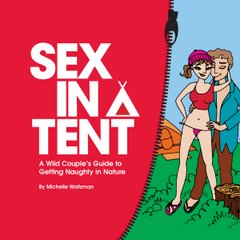
This is one of my selling points for tramping as a couple. You face challenges together while tramping, and come out with a stronger bond at the other end of it. Many of the couples I surveyed while writing Sex in a Tent confirmed that this one of the best things about their outdoor adventures together.

So if this works between people, why not (to a lesser degree) between a person and his or her gear? My backpack has been there with me through a lot. I've thought about shopping for a nice, new one - maybe with some more hi-tech features, or lower weight - but I've grown rather fond of mine.

It was lent to me by my Aunt Judy for my first multi-day jaunt into the wilderness some six years ago. When I told her how well it had worked for me, she let me keep it since her backpacking days were pretty much behind her. It moved with me to New Zealand, and has been on every tramp I've been on since.

Perhaps that's an extreme example, since most gear is not a family heirloom. But even things like hiking boots are difficult for me to throw away when the time comes. They've walked the miles, and it's sad to see them go.

I'm not sure how far this extends. I guess it depends on your personal experiences. If your life once depended on your camping knife, or your headlamp, or some other item that might otherwise seem pretty impersonal, you could find it hard to part with.

Of course this is the sort of thinking that drives retailers and manufacturers nuts. They would prefer we got quickly tired of our gear and excited about the latest marvel of technology they're selling. Instead, some of us wander into the shops lamenting how they "don't make 'em like they used to".

I do have a pair of boots that are at the end of their usefulness. By the time summer is over, I will have to bid them a fond farewell. They've served me well, and I will lament their passing.

Monday, October 26, 2009

Cool idea - the rain skirt

Photo: Craftzine.com

One of the least used items in my outdoors wardrobe is my pair of rain pants. They are a pain to put on once I'm on the trail because they don't go over my boots. They make me so sweaty that I end up soaked through anyway. They are, generally speaking, not worth the bother unless it's absolutely pouring.

Craftzine, a blog for the sew-it-yourself crowd, recently put up a post on how to make yourself a rain skirt out of an old raincoat. This is quite brilliant! You can put it on over your hiking pants and shorts, and take it off again, easily and without removing your boots! The open bottom makes it much less sweaty than rain pants too.

I can see that in rough terrain, where scrambling is necessary for instance, a long skirt would not be practical. But for other hikes where the trail is fairly flat or well benched, this could be an awesome solution.

In fact, I'm surprised none of the outdoor clothing manufacturers have tried this yet. The only change I would make to the suggested method on the Craftzine blog is that I would put snaps all the way down the opening. That way you can put it on and take it off easily, and you can have them closed up for more protection, or open some for more freedom of movement.

Now all I need is a sewing machine...

Saturday, August 22, 2009

What to Pack When You Need Everything

Packing for an active overseas trip is a challenge at the best of times. You need a lot of gear, it's hard to know what you'll be able to buy at your destination, you want to make sure you're prepared for the unexpected etc, etc.

What's even worse is a trip where you're going to be facing a variety of different weather, conditions and activities.

Right now, G and I are preparing for our trip to Africa. While we are on this trip we will be:
  • trekking up Mt Kilimanjaro for a week, where temperatures may well dip below freezing at night

  • going on a camping safari in the Serengeti where malaria is a concern and temperatures will be pretty hot during the day

  • staying in a cabin in Kruger National Park in South Africa where it could also be hot during the day, and possibly quite chilly at night

  • hanging out in Cape Town where it would be nice to look like we didn't just crawl out of the bush

  • visiting wine country, and attempting to show how classy we are - or at least get allowed into the tasting rooms!
So - what to pack? We're bringing one piece of checked luggage and one carry on each. I'm fitting in everything from a swimsuit to a down jacket, from sunscreen and a floppy hat to fleece gloves and thermals.

Strangely, when I went to choose a shirt to wear on safari that would afford me some protection from mosquitoes, I realised I didn't have a single thing that met the simple criteria of long sleeves, high neck, no holes or mesh, not too clingy, and too thick to bite through. I actually had to go buy a new shirt just for malaria protection! (And yes, we're also taking anti-malarial pills.)

And that's another issue - what medications to take along. Which anti-malarial? What about diarrhea? Altitude sickness? Bladder infections? We appear to be packing a small pharmacy, complete with water purification tablets. Better safe than sorry and all that.

I guess the upside of all of this is that I won't be tempted to buy a lot of cheesy souvenirs, since I'll have nowhere to pack them to bring back! I am, however, bringing an extra memory card for my camera so that I can bring back lots and lots of photos!! (Many of which I'll be posting here no doubt.)

So I'd better get back to it. Time to find out just how many stuff sacks I own!

Friday, August 07, 2009

Sleeping Bags Get Sexier!

Photo: Outdoor Retailer Show 2009 (photographer unknown)

Sleeping bags are design to be warm, light, durable, and compact - but finally someone has gone and specifically designed a sleeping bag that is meant to make it easier to have sex in a tent!
Alite Designs are newcomers in the outdoor gear world, but they are certainly doing their best to make a new niche for themselves. At the recent Outdoor Retailer show (which I had to read about online because I live way too far away to attend) they launched a range of new camping products - among them the "Sexy Hotness" sleeping bag.
What makes it designed for sex? The main feature is a zipper that opens straight up the middle of the bag, exposing your necessary bits without forcing you out of the bag completely. As an added bonus, this means you can walk around wearing the sleeping bag, and they've added reinforced "booties" on the bottom for this purpose.
The bag also has outer pockets where you can keep sexy essentials like condoms, lubricant and tissues, or whatever you like to have on hand. I'm told there's also a sexy Kama Sutra print inside the bag, in case you need inspiration.
The Sexy Hotness bags can be zipped together, or to other sleeping bags with a compatible zipper size, for added space.
I'm not sure how this will catch on. Zipping two regular sleeping bags together still seems like a better option to me, since you can remain completely inside an envelope of warmth and have easy access to each other. But perhaps this one will have appeal to some couples in ways I have not yet imagined!
To see a demo of the "Sexy Hotness" bag, check out the GO Blog video here. It's quite entertaining.

Friday, July 31, 2009

Bears: 1 - Engineers: 0

It was always just a matter of time before bears were found to outsmart "bear proof" food containers. There have been claims of breached food containers for a while now, but recently the New York Times ran an article about a particular black bear who has bested the Bear Vault 500.

The surprising thing is that the bear has not just overpowered the container and ripped it apart. She has instead systematically learned how to undo the locking mechanism to open the vault and get the food out. For anyone who has ever been frustrated by a "childproof" container, you know what an accomplishment this can be!
Bear canisters have become the preferred method of storing food in the Adirondaks in recent years because the clever black bears had figured out that food bangs hung from trees could be accessed by finding the rope and chewing or tearing it down. Now that one bear has figured out the canister, it's only a matter of time before others learn the trick too!

Other types of canister are available which require a screwdriver or a coin to open the locking mechanism, and bears have so far not found any way to get through those ones. (Although I can almost picture one rummaging around the campsite looking for loose change!) So if you are camping in bear country, that might be the way to go for now.

If you're determined to avoid bear encounters altogether you're left with a few choices. First, you could camp during the winter while the bears are hibernating. Second, you could join me down in New Zealand where there aren't any bears in the woods. Or third, you could turn your camping trip into a major detox and not bring any food! (OK, I don't recommend that one.)

Anyway, let this be a lesson to anyone who thought that bears were just big brutes without much intelligence. They are not to be underestimated - and they can climb trees, swim, and outrun you!

Saturday, March 07, 2009

The Beijing Workout

The Ming Dynasty may have taken track maintenance a bit too far!

First of all, my apologies for not posting anything for a while. I managed to get sent to Beijing, China last week for work, and since they charged for internet access by the minute at my hotel I figured I should save my blogging for the return home.

China was certainly an eye-opener. As you can see from the photo I took of the Great Wall above, everything you've heard about air pollution in Beijing is true! The roads are full of cars where only a decade ago most people would have been riding bicycles. Add to that the coal-generated power for heating and massive factories and you've got an environmental nightmare.

You don't hear much about outdoor recreation in China. I guess in the past there wasn't that kind of leisure time available. And now, it just doesn't seem to be part of their culture to appreciate being out in a natural setting. And yet, on a smaller scale the Chinese do enjoy getting outdoors. Tai chi at dawn is practised in almost every park around the country. Why exercise indoors when you could get some fresh (well, not exactly fresh) air at the same time?

While exploring a small, urban park in Beijing, I saw what I assumed to be a children's playground full of brightly coloured equipment. On closer inspection, however, it wasn't for children at all. It was an outdoor gym.
That's right, a full set of gym equipment in the park for anyone to use. No joining fee, no monthly fees, no pulsating dance music. In the photo above you can see the elliptical cross trainers in the foreground, the stationary bicycles to the right, and directly behind the cross trainers are treadmills. Nothing there used external power of any kind. The treadmills use sets of metal rollers on an uphill slope, and everything else just works with mechanical resistance. It's low-tech, low maintenance and probably quite effective.
So that's how folks in Beijing can get their workout for free. And perhaps that's why you see so few overweight people in China. There it's cheaper to be healthy than it is to be unhealthy - as long as they stay away from the local McDonalds!

Monday, February 23, 2009

Don't want to carry it? Eat it!

I saw this linked to a friend's Facebook page and just had to share it. I'm somewhat ashamed to say how long I considered whether this might be a real company producing edible outdoor equipment for campers! (At least I haven't responded to any of those e-mails telling me I've won an online lottery - yet...)

For pure entertainment value, go check out the EAT website where you can learn all about the joys of edible gear, from tarps made of "gummi skin" to sleeping bags filled with "veggie loft". There are even trekking poles in meaty flavours like chicken, shrimp, beef and for the vegetarians TVP.

Edible gear means you won't have to carry all kinds of food with you, and your gear gets lighter and lighter (and smaller and smaller) over the course of your trip.

OK, maybe an edible sleeping back or backpack will never really be a good idea, but I think they may be onto something here. What about edible packaging for the food you bring along? What if your cup-a-soup came in a gelatin envelope that dissolved right into the soup? No more empty packaging to carry around! Any food scientists out there? Hello? Bueller?

Anyway, have fun with the website. It looks like it's been kicking around since 2003, but then I'm a bit slow to notice these things!

Wednesday, December 03, 2008

Fabulous Feet

Some of Dirty Girl Gaiters' customers

Sometimes with hiking gear, we get so focused on being practical and technologically advanced that we forget about wearing stuff that is just plain fun!

Thankfully there's a gaiter company out there that hasn't forgotten to have fun, and they're spreading a bit of colour around the great outdoors.

Dirty Girl Gaiters use colourful fabrics and patterns to keep rocks and dirt out of your shoes while allowing you to express your most fabulous side.

These are not heavy-duty gaiters to wear on a mountaineering expedition. But if you're a trail runner or lighweight hiker, the stretch fabric may do well enough to keep your feet happy. Or maybe you just want to wear them as a fashion accessory!

Hats of to Dirty Girl for making hiking fun. And thanks to Tom at Two-Heel Drive for bringing them to my attention on his Christmas wish list. (I wonder which fabric he'd pick? I'm all for the "cherry on top".)

Friday, November 14, 2008

Summer Slumber

Another week, another new bit of gear. I really need to stop getting new stuff. But hey, the camera was a gift, and the Platypus was actually necessary. Well, pretty much. Anyway...

So today I finally made up my mind and bought a summer weight sleeping bag. As with most of my purchase decisions, it was based on the fact that the item in question was on sale.

As you may remember, I was undecided as to whether I should go with down or synthetic fill. In the end, I've gone synthetic. It's about 500 g heavier that the equivalent warmth in down, but I'm not really a lightweight backpacker anyway. It was a difference of a $95 sleeping bag vs a $230 sleeping bag. Both on sale.

The one I bought (pictured) is a Macpac Roam 150. Since Macpac are now selling through their own retail outlets, everyone stuck with their old stock is just trying to dump it and move on. That was the case at Bivouac this weekend, hence the $150 sleeping bag for $95.

It's rated to 10 degrees, so it's theoretically going to keep me warm enough if I'm sleeping in huts during the summer. For tent camping, I'll probably stick with my warmer bag unless it's really hot weather. The bag has a hood attached, so that should add a bit of warmth when needed. Also, G has lent me a cotton liner he never uses (since he bought a silk one) which will add another couple of degrees.

So hopefully this means no more sweaty nights in the huts! (And hopefully it doesn't mean shivering all night wondering what the hell I was thinking!) We still haven't managed to get away for a weekend this spring, but with a bit of luck we'll be doing that soon and I'll let you all know how the new gear works out.

Tuesday, November 11, 2008

Platypus Evolution

No, I'm not talking about the bizarre Australian animals that look like evolution at its most surreal. I mean the hydration bladders.

I've been a Platypus convert since some friends gave me one for my birthday about 7 or 8 years ago. The idea of being able to drink water at any time during a hike without the need to stop and take my bottle out of my pack pretty much sold me on the spot.
My Platypus was a 2 litre big zip version, not quite like the one in this photo because the end opposite the hose attachment was a large zip-loc type opening. It served me faithfully for many years and many kilometres, but last summer it was showing signs that it was not long for this world. The plastic near the hose attachment end was beginning to tear, and it was only a matter of time before the whole thing had a structural failure.

So I've acquired a shiny, new Platypus, this time without the zip-loc as I found it sometimes hard to close properly. I was expecting pretty much an exact duplicate of my old one, but it seems that over the past 7 or 8 years, the Platypus has evolved a bit.
First of all, the plastic used for the bladder feels a bit thinner and more flexible. Hopefully it's just as strong. The old one was quite stiff, so it's kind of nice that this is more lightweight and bendy.

Also, the new one has a hanging loop at the top, so you can hang it from a tree to make a shower. (I assume this is what they expect that to be used for. Perhaps there are other reasons to hang your platypus that I haven't thought of. Rinsing dishes maybe?)
The new hose has a right-angle attachment which may help to reduce strain on the plastic where it attaches to the bladder. And the hose is blue instead of clear. No idea why that would help anything, other than making it hard to tell if the water you're drinking isn't clear. I guess you'd figure that out when you fill the bladder anyway.

So there you have it - the evolution of the Platypus. Perhaps in several years' time I'll discover the next step when this one needs to be replaced.

Sunday, November 09, 2008

Top Tarp

A while back, we discovered that our emergency plan to use an extra ground sheet as a shelter if necessary was deeply flawed. First, the sheet was too small for the two of us to really shelter under in a storm and hope to stay dry. Second, it was not really designed for that purpose, so it lacked grommets and loops in all of the necessary places.

After much perusing in outdoors shops, we realised that what we wanted wasn't really available here in New Zealand. We were after a lightweight tarp (or fly if you prefer) that was going to keep the rain off, cover two people comfortably, and not weigh enough to make us ever leave it at home.

We ended up importing a tarp from Mountain Equipment Coop in Canada. (One of my favourite places to shop when I'm home for a visit!) It's 2.1m X 2.9m, and weighs just 438g. Today we had a trial run at setting it up on our hike along Cattle Ridge in the Rimutakas. I can tell you it certainly worked better than our old ground sheet! We'd easily fit under there, along with our gear. The loops and grommets are placed in logical positions, and well reinforced. And while my knot-tying skills still need some work, we got it looking pretty sturdy in a classic A-frame shape.
Meanwhile, we had a lovely 4-hour (minus tarp-trying and lunch-eating) hike on a beautiful spring day. There aren't a lot of open views from the ridge as it is below the bush line, but we did have this look over the harbour.
And if you need proof that spring has arrived in New Zealand, check out the koru (baby fern leaves) unravelling in the centre of this fern. For New Zealand, that's pretty much like daffodils sprouting from the ground! Fingers crossed for a warm, sunny summer.

Sunday, November 02, 2008

New Toys

It was a good birthday for me this year! Among other wonderful events like dinner with friends and going to Samoa, I got a new camera (thanks G!)

My old Olympus decided to stop working properly after less than four years, which was rather upsetting. Whenever I turn it on, the camera zooms all of the way in and won't zoom back out. That makes it rather useless, and fixing the electronics in a digital camera is generally not worthwhile unless it's an SLR.

So here I am with a brand, spanking new Fuji Finepix 8000 fd, as pictured above. After debating an upgrade to SLR, I decided that the need to have two lenses for enough options, and the extra weight, made it unworkable for me. I need portable solutions!

So instead, I went for a point-and-shoot with mega-zoom. As you can see on the photo, this camera has a massive 18X optical zoom. That makes it a bit bulkier than my old camera (which had a 10X zoom) but hopefully the ability to take better wildlife photos is worth the extra size and weight. You know, if I see any wildlife...

Other good things about this camera include an upgrade from my old 4MP to 8MP (good enough for me!), and the fact that this camera takes AA batteries, so I'm not stuck trying to find a place to recharge if I'm in some remote spot.

One drawback, however, is that my old camera case wasn't big enough for my new camera. So I needed to do some shopping before I could take it along anywhere. Hence I went case-shopping today.
This is my new case - a Lowepro d-res 25, with all-weather cover! My camera just barely fits snugly inside, which is good. I didn't want to be carrying around some huge, lunchbox-sized camera bag somehow attached to my backpack. This one is still fairly compact, and has a strap on the back that attaches to itself with 2 separate velcro closures so it's unlikely to come off, even if it snags on something.

So now I'm all set for another season of outdoor photography. I'm sure you'll be seeing the results here on my blog. Hopefully it won't take me too long to get used to the new tools!