Sunday, October 24, 2010

Getting Your Feet Wet

Soaked to the knees

One of my least favourite things about backpacking is hiking with soaking wet feet. In New Zealand, this is pretty much unavoidable. There are so many unbridged stream crossings that you'd have to pick your tracks very carefully to avoid wetting your boots. And I'm not talking about splashing through to test their "waterproof" qualities. I'm talking about the water gushing in over the top so there's full saturation!

Last weekend we went on our first overnighter in a while and yes, we crossed a stream that was just about up to my knees. Not deep enough to be a scary river crossing, but deep enough to get my boots thoroughly soaked for the weekend. There were also lots of muddy sections in the track, and a bit of bad judgement on one of them had me up to mid-calf in mud and wondering if I'd be able to pull my foot back out - and if I'd still be wearing my boot when I did. However, I digress.

Wet feet are a mere inconvenience most of the time, but on a long trip they can be a real problem if you don't deal with them properly. As we all remember from history class when we talked about WWI (you were paying attention, right?) "trench foot" can be quite crippling. It takes surprising little time with wet feet before the skin simply starts to fall apart. It's disgusting, painful, and sure makes hiking more difficult!

It's also easily avoided, by simply making sure your feet get dry for long enough to let the skin recover. To make sure this is possible, I always bring one pair of walking socks (which will probably get wet) and one pair of evening socks which I keep dry. As much as I hate putting those cold, wet socks back on in the morning, I know that I can't risk wearing my dry ones and letting them get wet too. Being left with no dry socks is not a good option.

Usually I also bring along a very stylish pair of fake crocs to wear in the evening. (I know, I know, but they're so light to carry!!) So my dry socks go into dry shoes at camp. If you don't carry a second pair of footwear and your boots are soaked, you can keep your dry socks dry by sticking your feet (with your dry socks on) into plastic bags before you put your wet boots back on. It's an even more fashionable look than my crocs!

I also try to head off foot damage before it happens by putting first aid tape over the parts of my foot (back of my heel, and a couple of my toes) where I most often get rubbing/blisters. I now change the tape daily after giving myself a nasty rash on one trip by leaving the same tape on for 3 or 4 days. It turns out my skin doesn't like that very much. It itched for weeks!

Getting your boots dry between trips can also be a challenge. Putting them too close to heaters can cause damage. Leaving them out in the sun is good, if you happen to get the right weather for it. One thing we do which seems to really help is to stuff old newspaper inside the boots. It absorbs the water out of the boots much faster than just leaving them. Swapping the old, saturated newspaper for fresh paper once or twice a day speeds up the process.

Also, most boots have removable insoles. Taking these out and leaving them to dry separately will allow more air to get to the bottom of your wet boots.

I'd love to hear your tips on dealing with wet feet and boots - so if you've got some ideas to share please post them as comments!

Saturday, October 02, 2010

Review: Katadyn Pro Hiker Filter


I must admit to becoming a bit spoiled as a tramper in New Zealand. Like many other Kiwis, I tend to rely on rainwater collection tanks at the backcountry huts for my supply of clean drinking and cooking water. Most huts have these tanks, and since the NZ backcountry is rarely hit with drought conditions, the tanks are not often empty.

However, when tenting away from the beaten track, or on the rare occasion when rainwater is not available, trampers here do need a backup method of getting their water supply. In the past, we have used either boiling (the most reliable method, but you use a lot of extra fuel) or purification tablets.

Last weekend, I was able to test drive a Katadyn Hiker Pro water filter, something I haven't used since I relocated to NZ. I got a review one from allfilters.com, who sell all kinds of water filtering equipment for both home and away. They only stock Katadyn filters, and I wanted to give the Hiker Pro a try because a) it's under $100 which makes it reasonable for most backcountry campers to add to their gear collections, and b) it's reasonably small and lightweight (11 oz.) so it's not a burden to bring along on a trip. It also claims to get up to 750 litre (200 gallons) through the filter before it needs replacing, which seems like good value.

What makes this mode the 'pro' version is that it has extra attachments to connect the filter to either a widemouth Nalgene bottle or a hydration bladder. Being a bladder-user myself, I thought this was a good feature. Unfortunately it doesn't connect to ALL bladders, just certain brands that have a quick connect fitting built in. So no easy connection for me. Even my Nalgene is a narrow mouth!

The initial set up was relatively straightforward and the instructions easy to follow. I pre-cleaned the filter as instructed by pumping about a litre of water through it before we left home. This cleaned the dust out of the filter (which was clearly necessary!)


I took the Hiker Pro out to one of our favourite spots in the Catchpool Valley on a lovely spring day. I stopped next to a running stream and gave it a go.

It was easy to pump, and quickly filled my bottle. Their fill rate of 1 quart (1 litre) per minute seems accurate. The water tasted great, and 24 hours later my tummy is just fine so it must have worked!

There is a good pre-filter at the end of the intake hose which keeps the filter from getting gunked up with leaves and other large particles.

They also supply you with a separate carrying baggie for the output hose, to keep it from getting cross-contamination when carried with the rest of the filter. Everything fits in a small, nylon pouch which packs well.


The Hiker Pro has a 0.3 micron filter. This is small enough to remove bacteria and protozoan cysts like Giardia. It will not filter out viruses, so if your water supply is likely to have viral contamination you should still boil it as a precaution.

This is not the smallest or lightest water purification you can buy, but unlike a Steripen you don't need to rely on batteries, unlike purification tablets it doesn't make the water taste strange, and unlike boiling you don't need fuel or fire. If I'm going somewhere with a questionable water supply, I will definitely be bringing it along.

Friday, September 10, 2010

Food to Go - a backpacking cookbook


Frank and Sue Wall, who run the popular Australian blog Our Hiking Blog recently released an e-book about eating well on the trails, co-authored by Sue Hadskis.

"Food to Go" is a bit different from other backpacking cookbooks. What I found unique about it is that it caters to a wide variety of ways to eat on a multi-day trip, rather than focusing on making dehydrated meals from scratch. It does cover recipes for such meals, but let's face it, there are a lot of backpackers who never cook from scratch when they're eating at home, and aren't about to start just because they're going on a trip!

There is a section comparing various pre-packaged freeze dried meals. These are growing in popularity, and it's nice to have some first-hand accounts regarding portion size, flavour and texture. While I wouldn't use these meals while hiking locally, I can see it being a good option if you are far from home and don't have access to a kitchen.

They also discuss dehydrating techniques at length, including examples of how to dehydrate a take-out meal for your trip. Brilliant! Even if you have no idea how to make a curry, you can buy one from your favourite restaurant, dehydrate it, and eat it at camp. Ditto your favourite stir fry or pad thai.

If you're willing to do a bit more work, there are also recipes which include the use of pre-packaged sauce mixes and other convenient ingredients. And of course for the purist there are recipes from scratch for both omnivores and vegetarians.

The book also includes sample four day menus from a variety of outdoors enthusiasts, myself included. It's quite interesting to see what different people like to eat on their trips. I know that when I'm at tramping huts in New Zealand, I'm always fascinated to see what other people are having for dinner. I think my biggest surprise was when some friends started cooking up garlic shrimp! (Granted, it was a one night trip.)

Food to Go costs $19.50 Australian - which is around US$17.50. You can download the pdf HERE.

Frank and Sue also have an e-book about hiking Tasmania's famous Overland Track - so if you're heading down under you may want to check that one out too.

Tuesday, August 31, 2010

Guest Post: Lingerie in a Tent

Photo: Jockey Underwear

Sorry for the long absence! Today I'm happy to say we have a special guest post from Maggie Ewles, who runs an informational website about swimwear and lingerie - two great things to take camping! You can visit her site at: www.swimwearandlingerie.com. Her post reinforces a lot of the advice in "Sex in a Tent", so it's nice to see more of us outdoorsy girls thinking along the same lines!

When hitting the great outdoors with your loved one for a little rest and relaxation, the authentic outdoors person will have a tried and true list of camping essentials. Topping the list will be all the survival basics such as a tent, hiking gear, cooking paraphernalia, knife, flashlights and bug spray. However, what if you were planning on surprising your partner with a little loving in the evenings? Nature lovers will shout out that true backwoods types don’t need props or foolish luxuries to get jiggy in the tent. However, I have found that a few tiny, pre-planned items included in your backpack can pack a heck of a wallop!

First things first…. We all know that bathing in the great outdoors isn’t always a sure thing. We also know that canoodling tends to involve the parts of our bodies that begin to smell rank right off the bat. You may be swimming every day, but quite frankly the things you have planned require a little more attention than a splash around four hours ago can provide. What’s a girl to do? Voila, to the rescue: baby wipes! Seriously, these little wonders offer more cleaning power and durability than your standard wet wipe napkin and they not only clean and freshen, your nether-belows, they also make pretty good kindling once they have dried out. Multifunctional and nice smelling things definitely deserve a little room in the pack, just be sure to pack them in a reseal-able bag or container.

How about your undies? Are you wearing the standard non-cotton (so they will dry overnight and not stay full of congealed sweat for the whole trip) underwear? Camping undies have come a long way in recent years. Backpackers can choose from a ridiculous amount of colors, patterns and styles and even find some that will double as swimwear which leaves more room in the bag for…yup a little lingerie.

We all love the look and feel of silk but let’s face it, silk really doesn’t pack or travel well. You want your fellow hiker staring in stunned awe at your curves and not your crinkly wrinkly whatever-that-thing-is hanging off your shoulders. So maybe now is the time to break out a little mesh slip or teddy that is completely inappropriate for the great outdoors. Seriously, the surprise factor here and the idea that you have planned this will be more than enough fuel to get your buddy fired up.

Next up, we have some important considerations for your body. If you are the type to shave/wax/depilate, consider changing the design of your bikini area. Like a gift being unwrapped, each layer provides a new surprise and thrill. If you are not the de-furring type, pat yourself on the back for not having to waste a good chunk of your life worrying about this crap.

Along with keeping your body clean and potentially less hairy, having visible chafe marks or grooves left from your standard daily underwear is pretty high on the not sexy list. Nothing like a massive welt running up each side of your hip to scream out; “I was wearing ill-fitting granny pants that reached up to my rib cage the whole day.” A likely mood killer, so, why not shop with an educated eye for a good fit and long term comfort when you are grabbing your camping gear?

Now is not the time to be overly eco-concerned. Bamboo and cotton are replenish-able resources, however, in a high humidity and sweat inducing environment, these are not the best choices. You could either bring a pair of cotton undies for each day of your trek with a few extras for those just-in-case scenarios, or you could bring two pairs of nylon/spandex or wool underwear and simply give them a good wash each evening and allow them to dry overnight, poof, so much more room in your pack for all of the little extras right? But don’t just grab the first pair of nylon briefs you see. Take a look at your body and decide what style is the most flattering; brief, bikini, thong or boyshort? Thank goodness the Tilley high-waist travel panties aren’t the only option any more. Once you have the style down, make sure they have no-chafe flat seams, are wedgie proof through all motions and are truly moisture wicking. If you are feeling fancy, by all means invest in some of the cooler high-tech options such as the inclusion of silver ions in the fibers for their anti bacterial/microbial action, sun blocking fabrics or the new no seam styles.

Now that we have your day to day stuff worked out and guaranteed not to leave unsightly wear and tear marks on your body, let’s talk about lingerie. A matching set definitely has a wow factor, but only if there is light in the tent. In which case, you will also be putting on quite the puppet show for all the forest animals and any intrusive camping neighbors. How about texture? Will you bring along something that is satiny smooth or heavily embroidered? Little ribbons and bows are really cute…until they get caught on the zipper of your sleeping bag and you end up needing to be cut free from the metal teeth. The lesson here is don’t bring something you don’t mind losing or destroying. Think of the shock and awe philosophy; after all you aren’t looking to get some real wear and tear out of it, just stimulate some interesting conversation.

We can move on to the third consideration; scarves. Lovely, long, silk or organza scarves can be used in so many different ways. Like… to hang up your every-day undies while they dry, restrain and immobilize an over extended… ankle that you sprained while distractedly daydreaming during your hike or even to tie up… a pulsating wound in a tourniquet when someone overestimates their lumberjack abilities. See? Scarves can be justified for a multitude of uses while also being exceptionally light and easy to pack and quite frankly an excellent source of entertainment, limited only by your imagination.

Whatever you decide to pack in your bag, just remember that confidence is truly the most titillating part of any lingerie set. Now stand tall and show off those sequins, just remember that Park Rangers seldom have a sense of humor so don’t try to pull any streaking Yeti jokes.

Maggie Ewles is the type of person will forgo that extra emergency food ration in order to pack a sexy little camisole set. She is an avid hiker and believes that women have sacrificed comfort for style for far too long. There is no good reason that stylish swimwear can’t look good and be wearable at the same time.

Saturday, June 26, 2010

Knives for Camping - What's Best

Imagine that you're dropped naked on a deserted island and you can only have one piece of equipment. What do you choose? Sleeping bag? Lighter? Compass? If you really had to fend for yourself, you probably would need a knife above all else. With a knife comes the possibility of food and shelter - and perhaps some makeshift clothes too!

We've all been told that a knife is one of those "essentials" we need to take on any hiking or camping trip. Most of the time they get used for slicing dinner ingredients, or maybe cutting off a length of cord for a laundry line - but when things go wrong you may need your knife to help you build a shelter, hunt, or fix your gear.

There are a ridiculous number of options out there when it comes to buying a knife. And today's post comes to you thanks to my partner G, who has spent a lot of time learning about knives and which ones are best for which tasks. He took me through the main types of knives you may take camping or hiking with you, and their pros and cons. If you have a favourite knife to bring along, leave a comment and let me know what it is and why it's the best!

Fixed blade

A fixed blade knife is not often the first choice for campers. The fact that it doesn't fold up means that you'll need a sheath or other carrying case - and that means extra weight. But a fixed blade is inherently stronger because there is one piece of metal that continues from the blade straight through the handle (inside the comfort grip) called the "tang". You may not always need that kind of strength - but if you found yourself actually depending on a knife for survival, you'd want one that wasn't likely to snap in half!

The knife pictured on top has a certain "Rambo" appeal with the serrated top and upturned "clipped point" blade. However, it is heavy and the thin tip is likely to break off under pressure. The bottom knife blade has a much stronger and more practical shape for general use, with a "dropped point".

Gimmicks like hollow blades to make the knife lighter also make it weaker, so if you don't want to carry anything heavy, you'll be sacrificing dependability in exchange for weight.

Single folding blade
A knife which folds is more convenient for hitting the trails since it will fit in a pocket and be lighter. The weak point of the folding knife is obviously the hinge. However, a single folding blade like the ones in the photo often come with a locking mechanism to prevent the blade from folding shut while in use. This is a handy feature that often isn't found on inexpensive camping knives.

The blades on the knives pictured are substantially bigger than you would find on a standard Swiss Army or Leatherman type of tool. This makes them more useful for big jobs like cutting branches, gutting fish, skinning an animal, etc. Again, these might not be tasks you need to do on an average camping trip, but if you were lost or hurt, it could be the difference between being able to put together a makeshift leg splint or not.

Multitool
The multitool (Leatherman is the best known brand) has many uses. Most models come with an array of blades, screwdrivers, pliers, wire cutters etc. for fixing a wide variety of items. However, they are usually not designed with camping in mind. The knife blades tend to be small and narrow, which means that they are not suited to tough jobs. Many of the other tools (screwdrivers come to mind) are unlikely to be needed on a camping or hiking trip.

Where multitools are really handy is a trip with lots of equipment that may need repair. So if you are on a long cycling trek, mountaineering, or on any big expedition, I expect you will want one of these on hand to fix mechanical faults. For general camping, I don't see them being worth their weight, which is significant.

"Swiss Army" knife
For me, the Swiss Army style of knife has always been a part of camping. The array of models available these days is a bit overwhelming. You can get everything from a magnifying glass to a USB drive on your knife. But the more toys attached to a knife, the heavier it gets.

For my money, the best tools to have on a camping knife of this type are a good blade (all come with 1-2 small blades), a saw for cutting small branches (the knife blades are too small for this) and an awl for punching holes and making small repairs to packs or other gear.

Of course, the can opener can be useful if you cook from cans, and the corkscrew seems to be unavoidable for some reason! The tweezers can also come in handy, although they are not the most effective tweezers around. Usually they'll do in a pinch when a sliver of wood is making life miserable.

Swiss Army knives are probably not great survival tools with their small, easily dulled blades. But their small size, light weight and low price will probably keep them at the top of the popularity charts for most campers and hikers. And as long as nothing goes too badly wrong - they'll certainly do the trick.

Of course a knife is only as good as it is sharp, so in a future post I'll talk about how to sharpen a knife.

Thursday, June 03, 2010

Mal's at it again! And you can help

This is what happens when the power of alcohol is used for good, not evil!

Last year I blogged about trail runner Mal Law's "7 in 7 Challenge" where he ran 7 of New Zealand's Great Walks in 7 days to raise money for Leukaemia.

Now he's decided to make this a going concern, and plans to run another 350 km on the trails in just 7 days this year. His new goal for fundraising - a total of $250,000.

But here's how you can help without even reaching into your pockets. New Zealand beer brand "Steinlager Pure" is giving away $100,000 in funding to the best idea for a "pure future". Mal has added his 7 in 7 Challenge to the ideas competing for the funding, and he's in the lead!

You can vote for Mal's idea to help him secure the money to make his second challenge week happen without grovelling at the feet of corporate sponsors. Just follow this link http://www.purefutures.co.nz/Find-a-Pure-Future.aspx and cast your vote for Malcolm Law.

Voting continues throughout this year, so make sure you spread the word.

Saturday, May 08, 2010

Spring Fever?

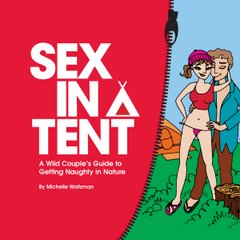
There must be something in the air around this time of year. Last spring I was interviewed by three leading women's magazines about outdoor sex/romance. Although in the end, only one of the articles made it to print (in Cosmo, no less).

This year, spring fever seems to have struck again. Within a week of one another I was contacted by a writer working on an article for Backpacker magazine, and one writing a column for Esquire. Thanks to the very long lead times for magazines, it will be a few months before I can confirm whether any of this will go to print. But it's still great to be considered an expert source!

I can tell you one thing - when I wrote this book I never would have guessed it might get me quoted in Cosmo and Esquire!

Saturday, April 24, 2010

"Campground Rage" at Bachelor Party

A photographers enjoys the (normally) tranquil Glenorchy

The normally quiet little village of Glenorchy on New Zealand's South Island (absolutely STUNNING place, by the way) got a taste of urban violence a while back when some guys decided to have a big night out for their friend's bachelor party, then stumble back to the campground late at night. I'm a little late getting this posted - it happened back in March.

Here's the whole story according to the Southland Times:

Celebrating a friend's impending marriage went horribly wrong for a man in Glenorchy when he was stabbed twice at a campsite in the early hours of yesterday.

Detective Sergeant Grahme Bartlett said an argument developed about 2.50am between a 53-year-old British man camping in a tent at the Glenorchy Holiday Park and two men who were using the nearby kitchen.

During the argument one of the men who had been in the kitchen was stabbed twice, once in the chest and once in the side of his stomach, he said.

The man was taken by ambulance to Dunedin Hospital and was last night in a serious but stable condition.

The second man who had been in the kitchen suffered a minor knife wound to his finger but managed to restrain the British man for about an hour until police arrived, Mr Bartlett said.

The two men in the kitchen are understood to have been part of a group from Gore who were in town for a stag party.

Holiday Park manager Stan Roney said there was a group of about 20 people staying at the campsite who had been out drinking and he understood two of them had decided to "have a feed".

Mr Roney said he had moved to Glenorchy from the Gold Coast in Australia to escape this kind of violence so it was disturbing to have it happen in such a quiet place.

"Over there (the Gold Coast) you get this all the time. You come back here and get something like this and it's a little bit frightening," he said.

The attack has shocked the sleepy settlement at the top of Lake Wakatipu, with many residents spoken to by The Southland Times struggling to remember the last time a similar incident occurred.

Nicole Scott, who has lived in Glenorchy for 15 years, said as far as she knew there had never been another stabbing since she had lived there.

"Everybody will be quite surprised. It's not exactly something that happens every day," she said.

Another longtime resident, Ronda Gollap, said she had lived in Glenorchy all her life and had never heard of anything like this happening before.

She could understand being upset at people making noise late at night but an argument escalating into such violence was unbelievable, she said.

The British man has been charged with wounding with intent to cause grievous bodily harm and assault with a weapon.

Friday, April 09, 2010

Reclaimation by Nature

I love visiting places where man's influence is being slowly replaced by what nature intended.

Over Easter weekend, we took a trip up to the Coromandel Peninsula on New Zealand's North Island. It's an area that has been quite heavily mined for gold in the past (and to some degree even now) so there are a lot of relics of old mines around.

We visited the Karangahake Gorge, once the site of a large gold mining operation. While some of the tunnels, tracks, etc. are being preserved by the Dept. of Conservation, you can see where nature is taking its course.

Ferns and other plants are sprouting up in cracks in the old walls.

It's an interesting juxtaposition of man made and natural environments.

Saturday, March 27, 2010

Book Review: Every Day's A Good Day

Here in New Zealand, we are sometimes a bit blasé about using active vocanoes for our recreational activities. Mt. Ruapehu has had fairly major eruptions as recently as 1996, but we continue to ski, climb and hike on it year-round.

William Pike is a Kiwi who found himself in just the wrong place at the wrong time. During a climbing trip with a friend on Ruapehu in 2007 they stopped for the night at Dome Shelter, a small hut just below the crater lake. That night, the mountain had a severe case of indigestion and sent a lahar (powerful stream of mud and rocks) straight through the hut on its way down the mountain.

William's companion was miraculously unhurt, but William was blasted by rocks, and had one leg pinned in what amounted to natural concrete. Every Day's a Good Day is the story of William's ordeal on the mountain, rescue, and recovery.

I really wanted to like this book, because I admire those who take such a major setback in their lives (in the case the amputation of his right leg below the knee) with such acceptance and optimism. Throught the story, William never seems to feel hard done by with his extreme bad luck, despite being the ONLY person hurt by the eruption. Nor does it alter his love of the outdoors or of mountaineering. There's no doubt that faced with similar circumstances, I would hope to find that kind of strength and positive attitude in myself.

Unfortunately, William is not a particularly strong writer. Although his story is compelling, he fails to make the readers feel like they are living through it with him. It also seems that he couldn't find enough to say about the actual incident to fill out a book, so instead he tells us irrelevant stories about his childhood firing a pea-shooter and his youth on the school water polo team.

Coincidentally William has just been in the news here again. (No he hasn't lost another limb!) He has just launched the William Pike Challenge Award for students. Participants will do a mix of community service, such as helping clean up ski areas, and take part in outdoor activities such as climbing the central plateau mountains, Ruapehu, Tongariro and Ngauruhoe.

William is a school teacher and wanted to encourage more young people to gain new skills and confidence by participating in outdoor activites. Good on ya William!