Monday, October 19, 2009

Mt Kilimanjaro - part 2

Above the clouds on Kilimanjaro

From the second day, the terrain became much more volcanic. The lush jungle of day one was left behind (or below) and the vegetation became scrubby and sparse.

The track also became steeper and more rocky, but the most noticeable change was the dust! We were climbing in dry season, which means the track was unlikely to be muddy and slippery. Instead there was dust everywhere, including up my nose and in my teeth!

Our guide on the volcanic terrain

However, it was a sunny, hot day and we got to our next camp, Shira Camp, by 1:30pm for a late lunch. Shira Camp sits at around 3,800m, and by the time we arrived my head was aching from the altitude. I took some pain relief, and that helped ease it off a bit - but having already felt the effects of the altitude on day two I was pretty concerned about how I would hold up for the rest of the trip.

My worries intensified that night. About an hour after dinner I began to feel unwell, but was taken by surprise when I suddenly had to stick my head outside the tent and vomit. It happened a second time later that night (although by this time I had a plastic bag at the ready!) I knew this was a common reaction to altitude, but it did little for my confidence. It was only day two!!

I did manage to hold down my porridge the next morning (I avoided eating anything more rich than that) which was good because day three involved quite a long walk. We ascended to 4,600m at a place called the Lava Tower, then descended to Barranco Camp, back down at 3,900m for the evening.

We came across a little striped mouse on one of our breaks, who was busy looking for dropped crumbs and other goodies.
By the time we were approaching the Lava Tower my head was hurting again, as this was another new high altitude. I was hopeful that as we went back down towards the camp the headache would subside. That's the point of these "acclimatisation days" where you walk up to a higher altitude, then sleep lower down. To some extent I did feel better when we got to camp, consider the seven hours we'd been walking.

In front of the Lava Tower
As a reward for our efforts, the clouds parted and we got a clear view of the summit before it got too dark.

Saturday, October 17, 2009

Mt Kilimanjaro - part 1

Kilimanjaro as seen from the air

Climbing Mt Kilimanjaro, the highest peak in Africa, has been on my "to do" list practically since I started hiking. It's hard to say why, except that it's one of the few well known mountains that can be climbed by those of us with absolutely no mountaineering skills. The idea that I could knock off one of the Seven Summits without crampons or a harness was very tempting indeed.

Luckily G felt the same way, and so when we were planning a trip to Africa we immediately included a Kili trek on our agenda. But deciding to climb is only the first of many decisions. There are several routes up the mountain, different time frames for climbing, and of course many, many companies that will guide you on your trek (you're not permitted to go unguided) in various degrees of comfort for various prices.

In the end, we decided on the 7-day Machame route. Taking seven days increases the time you have to acclimatise to the altitude, which in turn improves your chances of summiting. Some trips take as little as five days, but apparently the odds of summiting on those is about 50/50.

We went with a company called Zara, who also do safari trips, Zanzibar trips etc. They're a bit of a one-stop shop in Tanzania with their own hotels and so on, which was why we chose them. We were able to combine a Kili climb and a five day safari trip into a brief two week visit to Tanzania, and they handled all of the logistics. If you've got time on your hands, I'm sure you could find something cheaper, but we were willing to pay a bit more for the convenience of knowing we were booked in, and not having to arrange anything when we got there.

Machame Gate
The climb started off at Machame Gate, which is already 1900m above sea level. It's a chaos of bags, porters, walkers, vehicles, and in our case thick mist. How they keep track of which bags, food, tents etc. come from which groups I have no idea, but it all seemed to work out.

The first day's walk was relatively easy, and followed a gradual incline through misty jungle. It was quite beautiful walking through the mist, even though there were an awful lot of people on the trail.

Eventually it started raining, but not so hard that it made us uncomfortable. However, most of our first day was spent with raincoats on.


Machame Hut marks the first stop at 3,000m. There was a large campground, and we were already above cloud level. G and I had our own tent, Jonathan, the other member of our group, had his own tent. We also had a little dining tent, complete with table and chairs. All of our breakfasts and dinners were served in there, which protected us from any rain, wind or cold. As we got higher up the mountain, I was definitely glad to have it!


The low point of the trip was probably the toilets at the campgrounds. They were all long drops, mainly squat style. This in itself is no problem, but when you're dealing with large numbers of campers who are not used to squat toilets, there's a lot of missing the hole! Generally it was OK when we arrived in the afternoons, but by morning the toilets were revolting!

I was surprised how cold it was already on the first night, and a little concerned about what was in store for use higher up!

Friday, October 09, 2009

Why did the ---- cross the road?


We went on two safari trips while we were in Africa: one in Tanzania (taking in the famous Serengeti) and one in Kruger National Park in South Africa.

While taking my hundreds of wildlife photos, I began to realise I had quite a few photos of different animals crossing the road. After all, the animals have the right of way in these places!

I decided I'd add my bit to the world's oldest joke. No chickens here (but one is pretty close.) If you have a great punchline about why any of these guys are crossing the road, leave it as a comment!

Why did the zebras cross the road?
Why did the giraffe cross the road?

Why did the waterbuck cross the road?

Why did the guinea fowl cross the road?

Why did the buffalo cross the road?

Why did the elephants cross the road?

Why did the impala cross the road?

More to come from the Africa files soon...

Monday, October 05, 2009

Back and blogging!

Photo: New Zealand Land Search & Rescue

Did you miss me?

I promise there will be lots of photos and stories about my trip to Africa coming soon. First I have over 750 photos to sort through! (Ah, I love the age of digital photography...)

In the mean time, I found an interesting follow-up story about how New Zealand is trying to replace their current, and somewhat ineffective, backcountry intentions forms. I first blogged about it here.

Currently, people going into the backcountry are encouraged to fill out a paper form outlining their intended route and return date and time, and include contact info. Upon their return, they are meant to confirm that they have safely completed their trip. Unfortunately, a lot of people forget to do that part (in their excitement over the proximity of a shower and a cheeseburger) which makes for a lot of unnecessary and expensive follow up work for the Department of Conservation and Land Search & Rescue.

DoC is now looking at an online/mobile system to replace the paper forms. This article outlines one of the proposed options. It sounds pretty good to me. Getting tourists to use it may be a challenge though, since they may not have internet access prior to their backcountry excursions.

Wednesday, August 26, 2009

Please Stand By...

If you read my last post you know that I'm off to Africa. I'll be gone for almost six weeks, and I'm not at all sure whether I'll be getting much internet time. So probably, things will be very quiet here for a while.

On the bright side, I will return with tales of adventure and excitement aplenty (or I should do anyway) and will start posting those as soon as possible.

Meanwhile, you can turn off your computer and go outside! ;o)

Saturday, August 22, 2009

What to Pack When You Need Everything

Packing for an active overseas trip is a challenge at the best of times. You need a lot of gear, it's hard to know what you'll be able to buy at your destination, you want to make sure you're prepared for the unexpected etc, etc.

What's even worse is a trip where you're going to be facing a variety of different weather, conditions and activities.

Right now, G and I are preparing for our trip to Africa. While we are on this trip we will be:
  • trekking up Mt Kilimanjaro for a week, where temperatures may well dip below freezing at night

  • going on a camping safari in the Serengeti where malaria is a concern and temperatures will be pretty hot during the day

  • staying in a cabin in Kruger National Park in South Africa where it could also be hot during the day, and possibly quite chilly at night

  • hanging out in Cape Town where it would be nice to look like we didn't just crawl out of the bush

  • visiting wine country, and attempting to show how classy we are - or at least get allowed into the tasting rooms!
So - what to pack? We're bringing one piece of checked luggage and one carry on each. I'm fitting in everything from a swimsuit to a down jacket, from sunscreen and a floppy hat to fleece gloves and thermals.

Strangely, when I went to choose a shirt to wear on safari that would afford me some protection from mosquitoes, I realised I didn't have a single thing that met the simple criteria of long sleeves, high neck, no holes or mesh, not too clingy, and too thick to bite through. I actually had to go buy a new shirt just for malaria protection! (And yes, we're also taking anti-malarial pills.)

And that's another issue - what medications to take along. Which anti-malarial? What about diarrhea? Altitude sickness? Bladder infections? We appear to be packing a small pharmacy, complete with water purification tablets. Better safe than sorry and all that.

I guess the upside of all of this is that I won't be tempted to buy a lot of cheesy souvenirs, since I'll have nowhere to pack them to bring back! I am, however, bringing an extra memory card for my camera so that I can bring back lots and lots of photos!! (Many of which I'll be posting here no doubt.)

So I'd better get back to it. Time to find out just how many stuff sacks I own!

Sunday, August 16, 2009

One for the Ladies

Hanging out with Sir Ed Hillary (in statue form) reminds me that we need more hiking role models for women

There are lots and lots of resources out there for hikers and backpackers - but very few are aimed specifically at women. Now there is a new chick on the block - Hiking Lady.

This site has the makings of a good resource, but is still looking like it's just getting off the ground with just a few bits of gear and clothing listed so far.

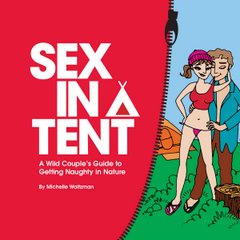
I was a little disappointed that the books featured on the "Book of the Month" list are all by and about male adventurers. Come on - if you're going for the girl market, give us books about women, by women, or at least acknowledging the existence of women! Perhaps I need to send over a copy of "Sex in a Tent" for review ;o)

I'll be keeping an eye on this site to see if it lives up to its potential. Sadly I'm just a bit too lazy to set up such a resource myself. Maybe I'll get around to it eventually! I've already done most of the research - I just need to build the website to put it on.

Meanwhile I hope the Hiking Lady keeps building up her site and gets support from the outdoor women's community.

Friday, August 07, 2009

Sleeping Bags Get Sexier!

Photo: Outdoor Retailer Show 2009 (photographer unknown)

Sleeping bags are design to be warm, light, durable, and compact - but finally someone has gone and specifically designed a sleeping bag that is meant to make it easier to have sex in a tent!
Alite Designs are newcomers in the outdoor gear world, but they are certainly doing their best to make a new niche for themselves. At the recent Outdoor Retailer show (which I had to read about online because I live way too far away to attend) they launched a range of new camping products - among them the "Sexy Hotness" sleeping bag.
What makes it designed for sex? The main feature is a zipper that opens straight up the middle of the bag, exposing your necessary bits without forcing you out of the bag completely. As an added bonus, this means you can walk around wearing the sleeping bag, and they've added reinforced "booties" on the bottom for this purpose.
The bag also has outer pockets where you can keep sexy essentials like condoms, lubricant and tissues, or whatever you like to have on hand. I'm told there's also a sexy Kama Sutra print inside the bag, in case you need inspiration.
The Sexy Hotness bags can be zipped together, or to other sleeping bags with a compatible zipper size, for added space.
I'm not sure how this will catch on. Zipping two regular sleeping bags together still seems like a better option to me, since you can remain completely inside an envelope of warmth and have easy access to each other. But perhaps this one will have appeal to some couples in ways I have not yet imagined!
To see a demo of the "Sexy Hotness" bag, check out the GO Blog video here. It's quite entertaining.

Friday, July 31, 2009

Bears: 1 - Engineers: 0

It was always just a matter of time before bears were found to outsmart "bear proof" food containers. There have been claims of breached food containers for a while now, but recently the New York Times ran an article about a particular black bear who has bested the Bear Vault 500.

The surprising thing is that the bear has not just overpowered the container and ripped it apart. She has instead systematically learned how to undo the locking mechanism to open the vault and get the food out. For anyone who has ever been frustrated by a "childproof" container, you know what an accomplishment this can be!
Bear canisters have become the preferred method of storing food in the Adirondaks in recent years because the clever black bears had figured out that food bangs hung from trees could be accessed by finding the rope and chewing or tearing it down. Now that one bear has figured out the canister, it's only a matter of time before others learn the trick too!

Other types of canister are available which require a screwdriver or a coin to open the locking mechanism, and bears have so far not found any way to get through those ones. (Although I can almost picture one rummaging around the campsite looking for loose change!) So if you are camping in bear country, that might be the way to go for now.

If you're determined to avoid bear encounters altogether you're left with a few choices. First, you could camp during the winter while the bears are hibernating. Second, you could join me down in New Zealand where there aren't any bears in the woods. Or third, you could turn your camping trip into a major detox and not bring any food! (OK, I don't recommend that one.)

Anyway, let this be a lesson to anyone who thought that bears were just big brutes without much intelligence. They are not to be underestimated - and they can climb trees, swim, and outrun you!

Friday, July 24, 2009

Sharing and Caring

Belmont Trig - reachable by foot or mountain bike

Yesterday at work we were discussing the shared pedestrian and cycle lane one of my colleagues uses to walk to work and back. It got me thinking about the number of shared pathways through the wilderness, and whether they work.

More and more it seems there is competition for trails between the hikers and the mountain bikers. Hikers want to keep the wilderness pristine (rut-free) and quiet, with narrow, unassuming tracks. Mountain bikers want enough space to safely enjoy the ride, and get around the non-bikers if necessary. Often this leads to track being designated either for hiking or for biking. Sometimes, though, we are asked to share.

Last weekend G and I were using a shared track in Belmont Regional Park. It was a beautiful, sunny winter day and there were many people out enjoying the break in the weather which thankfully fell on a Sunday. The track is popular because it can be accessed right from the town of Petone. So we shared the track with lots of dog walkers, some trail runners, and a number of mountain bikers.

This particular track follows a stream through a gorge, so at times the track is narrow and drops off to one side, with a steep wall on the other side. It could lead to problems as people try to get past each other, but everyone was very accommodating. If we could step aside to let a cyclist through, that's what we did. If there was a narrow bit coming up, the cyclists would stop if someone was walking through, rather than try to scrape by.

Sharing a track is easy, but it means thinking about what's going on around you, and not just getting lost in your own experience. A daydreaming walker can be infuriating to runners and cyclist, ambling up the middle of a track oblivious to those behind; cyclists enjoying the thrill of a good downhill run can terrorise hikers heading up (or down) the same hill; a poorly behaved dog can give chase to a terrified cyclist.

Shared tracks are a sometimes unfortunate reality, but they're not going away so we all have to learn to get along out there. It's easy to get frustrated, but remember that you're out in the wilderness to relax. It's not a hiker's fault that hiking is slow. It's not a cyclist's fault that their wheels can spray mud; but it is the dog owner's fault if there's poop on the track! (Bring a baggie, it's not that hard!)

So go out there and enjoy the trails however you prefer. But remember to respect you fellow user, and be prepared to break your stride so we can all safely stay on track.

(I feel like a public service announcement. Oh well, sermon over.)