Wednesday, June 11, 2008
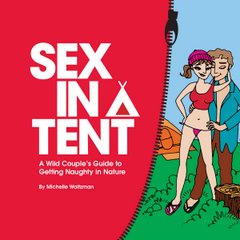
Sex in Antartctica
Monday, June 09, 2008
Another tourist/tramper dies in NZ
On May 31, Polish tourist Jacek Gryzbowski, an experienced hiker, went for a day walk in the Rimutaka Forest Park near Wellington. His plans were ambitious, but he was well equipped and had done lots of hiking before. He was 28 years old.A week later, after several days of searching, rescuers found his dead body in a log jam in a river. River crossing is a common part of tramping in New Zealand, but it's also the most common cause of tramping-related death.
It's not really clear why this particular river crossing ended so tragically, but it's possible that Gryzbowski underestimated the amount of water flowing in the mountain stream. He seems to have chosen a very bad place to attempt to cross. Once pinned in the log jam, it would have been very difficult to recover.
People come from all over the world to experience New Zealand's amazing parks and tracks. So it's always disturbing when someone loses their life doing it. Often they are unskilled and unprepared, and get into trouble because they haven't got the skills to tackle the trails they have chosen. In this case, however, it was someone with every reason to think he could handle it.
The more of these stories I hear, the more it reminds me how much riskier the wilderness becomes when you go in there alone. If anyone had been with this guy, he might be alive right now, laughing about his tumble into the river over a beer. It's hard when you're travelling alone to find people to hike with, but if you can I think it's a much safer way to go.
For anyone who is considering a trip to New Zealand, and hoping to do some tramping while they're here, this is my advice: find other people who want to do the same trip as you and go together. Or find the local tramping club, and see if you can go on one of their organised trips. Having someone around to raise the alarm, go for help, or pull you out of a tight situation, is priceless.
I know that a lot of people like the solitude of tramping alone. I get it. But it comes with a much higher risk or getting into trouble. Well, maybe the risk of getting into trouble is actually the same, but your chances of getting out of trouble are greatly reduced!
If you're interested, there's coverage of the Jacek Gryzbowski story here.
Tuesday, June 03, 2008
Captivating Kapiti Island
Last weekend we took a long overdue trip to Kapiti (prounounced CAP-it-ee) Island, about an hour north of Wellington, and about 5km off the coast.The island is a nature reserve, and all non-native predators (such as rats, possums and stoats) have been removed. The previously-cleared bush has been allowed to regenerate for over a century, and the bird life has returned to this safe haven.
Visiting the island requires a permit from the Department of Conservation. There are 50 issued for one landing spot and 18 for another. This keeps human impact down, and makes it much easier to control potential re-introduction of pests. DoC has licensed two companies to ferry permit-holders out to the island, and they are certainly taking advantage of their duopoly. A round trip that takes 10-15 minutes each way costs $55.
Each landing area has a set of well-defined tracks for visitors. We visited Rangatira, which is the main destination. The track leads up to the highest point on the island (512 metres) and back down in a loop. Visitors to the other drop-off point, North End, have the option of staying at a small lodge overnight, but at $265 per person, that was not in the cards for us.
We were welcomed to the island by a member of the local Maori iwi (tribe) who own the land. While DoC manages the island, the crown does not own it, so the local Maori do have some say about what happens there. We got a briefing on the island's history (both human and natural) and what we could expect to see.
The first thing you notice on Kapiti Island is the sound. The bush is alive with birdsong - far more than you hear even way out in the wilderness on the mainland. This must be what all of New Zealand once sounded like, before humans arrived. Millions of birds, and no predators to make them stay quiet! I'm going to mention several birds that I don't have pictures of, but if you want to see what they look like they should all be pictured here.
We started uphill, and although we heard bellbirds and tuis, we could only see the occasional robin or saddleback, and some stitchbirds (or hihi) at feeders. The hihi are an example of why the islands are so crucial, as they were extinct on the North Island by 1880, only surviving because of these offshore islands.
Occasionally we'd hear something shuffling along in the leaf litter, and spot a weka. We'd seen lots of wekas on the South Island, so we were used to how unafraid of humans they are.

On the summit, we stopped to have lunch and take in the view. It was a bit overcast, so we were denied views of the South Island and Taranaki, but we could see back to the mainland at least. There were a couple of wekas hanging around the hikers, hoping for a free meal. We weren't too concerned about them, until one lunged forward and took a huge bite out of G's sandwich! Cheeky bastard! He ran off with his prize before we could even react.
On the way down we spotted a kaka up in a tree. They are native parrots, but not as infamous as the kea. This one, however, was obviously used to having his way with people's stuff. He flew down and landed on G's backpack (which he was wearing at the time) and started trying to find an opening! I had to shoo him off. He later went after another hiker's hat, but didn't get it.

Down at the bottom of the hill, we saw a takahe. These are odd-looking blue and green endangered birds, that resemble another New Zealand favourite, the pukeko. However, these guys are bigger with shorter legs, and can't fly. (Pukekos can fly, but generally prefer not to.)

Also hanging out in the area were a bunch of kereru (wood pigeons). These guys are huge, and look like they'd be very good to eat. I'm a bit surprised that they weren't hunted to extinction by either the Maori or the Europeans. But I guess when you've got so many flightless birds to eat, it's not worth the bother of catching the ones that can fly.

Overall, it was a lovely day. I'm not a big bird watcher, but the sheer abundance of them on Kapiti Island makes it a fun place for a day hike. The only residents we didn't manage to spot were the kiwis, who prefer to come out at night.
Friday, May 30, 2008
Sir Ed Hillary "Good as Gold"
Since the passing of Everest pioneer Sir Edmund Hillary at the beginning of this year, New Zealanders (including the Government) have been looking for appropriate ways to make a fuss over his contribution to this country, and the world in general.
Actually, as far as I can see from these pictures (courtesy of New Zealand Post, by the way) the silver one looks a lot nicer anyway.Monday, May 26, 2008
Adventure Tourism Gone Wrong
Wednesday, May 21, 2008
Matt Damon Gets Lost
Saturday, May 17, 2008
Canadians Love Sex in a Tent!
That's a whole lot of Canadians getting it on inside their tents! And this in a country where, let's face it, the summer camping season is pretty short. So basically, if the tent is rockin', don't come knockin'!
Wednesday, May 14, 2008
Meeting Your Outdoorsy Other
Today I saw a post on the Get Outdoors blog where they quote a climber who complained about how indoor climbing gyms can be a bit of a meat market. I'm going to assume she has a boyfriend or husband.Tuesday, May 06, 2008
Walking the Appalachian Trail
Last night I went to Club Night at our local tramping club, where a couple named Susan Guscott and David Castle gave a presentation about their recent 2,156 mile thru-hike of the Appalachian Trail, or AT. This was a Kiwi couple, so they had certain limits, such as a 6-month tourist visa, and having to do all of their prep before flying in.Thursday, May 01, 2008
The Curious Kea
New Zealand is home to some very unique bird life, and while I was on the South Island over the summer I had the privilege of coming face-to-face with one of the most unique - the kea.The kea is the world's only alpine parrot, and only lives on the South Island of New Zealand. What sets them apart from other birds is their remarkable intelligence. Some researchers have put them on par with dolphins in terms of their problem-solving abilities.
That's all very good, except that this extraordinary intelligence can make them a bit of a pain to nearby humans, who are used to more passive birds. Keas are not passive - they are curious and playful. And they are not afraid of humans, as we learned by hiking on their turf. Here is G having a chat with one on Avalanche Peak.

I like to think of keas as the "reverse engineers" of the bird world. They like to figure out how things work by taking them apart. They use their sharp, hooked beaks and firm grip to accomplish this. Some of their favourite things to disassemble are hiking boots, windshield wiper (as pictured below) and backpacks. Given the opportunity, I'm told, they will also pull the stuffing out of a sleeping bag. Wouldn't that be like a bird horror-show? "Feathers! They're full of FEATHERS! Murderers!!!"
While we were hiking along this track marked by poles, I saw some keas going after the bolts holding the poles together. My theory: they're trying to figure out how to move the poles around and make all of the hikers go the wrong way. You know, as a practical joke!
So if you find yourself in the company of a kea, remember that you should never underestimate what they are capable of (destroying). But mostly, you should enjoy their company, their friendly laughter, and remember that you are a guest in their home, not the other way around.