Monday, October 05, 2009

Back and blogging!

Photo: New Zealand Land Search & Rescue

Did you miss me?

I promise there will be lots of photos and stories about my trip to Africa coming soon. First I have over 750 photos to sort through! (Ah, I love the age of digital photography...)

In the mean time, I found an interesting follow-up story about how New Zealand is trying to replace their current, and somewhat ineffective, backcountry intentions forms. I first blogged about it here.

Currently, people going into the backcountry are encouraged to fill out a paper form outlining their intended route and return date and time, and include contact info. Upon their return, they are meant to confirm that they have safely completed their trip. Unfortunately, a lot of people forget to do that part (in their excitement over the proximity of a shower and a cheeseburger) which makes for a lot of unnecessary and expensive follow up work for the Department of Conservation and Land Search & Rescue.

DoC is now looking at an online/mobile system to replace the paper forms. This article outlines one of the proposed options. It sounds pretty good to me. Getting tourists to use it may be a challenge though, since they may not have internet access prior to their backcountry excursions.

Wednesday, August 26, 2009

Please Stand By...

If you read my last post you know that I'm off to Africa. I'll be gone for almost six weeks, and I'm not at all sure whether I'll be getting much internet time. So probably, things will be very quiet here for a while.

On the bright side, I will return with tales of adventure and excitement aplenty (or I should do anyway) and will start posting those as soon as possible.

Meanwhile, you can turn off your computer and go outside! ;o)

Saturday, August 22, 2009

What to Pack When You Need Everything

Packing for an active overseas trip is a challenge at the best of times. You need a lot of gear, it's hard to know what you'll be able to buy at your destination, you want to make sure you're prepared for the unexpected etc, etc.

What's even worse is a trip where you're going to be facing a variety of different weather, conditions and activities.

Right now, G and I are preparing for our trip to Africa. While we are on this trip we will be:
  • trekking up Mt Kilimanjaro for a week, where temperatures may well dip below freezing at night

  • going on a camping safari in the Serengeti where malaria is a concern and temperatures will be pretty hot during the day

  • staying in a cabin in Kruger National Park in South Africa where it could also be hot during the day, and possibly quite chilly at night

  • hanging out in Cape Town where it would be nice to look like we didn't just crawl out of the bush

  • visiting wine country, and attempting to show how classy we are - or at least get allowed into the tasting rooms!
So - what to pack? We're bringing one piece of checked luggage and one carry on each. I'm fitting in everything from a swimsuit to a down jacket, from sunscreen and a floppy hat to fleece gloves and thermals.

Strangely, when I went to choose a shirt to wear on safari that would afford me some protection from mosquitoes, I realised I didn't have a single thing that met the simple criteria of long sleeves, high neck, no holes or mesh, not too clingy, and too thick to bite through. I actually had to go buy a new shirt just for malaria protection! (And yes, we're also taking anti-malarial pills.)

And that's another issue - what medications to take along. Which anti-malarial? What about diarrhea? Altitude sickness? Bladder infections? We appear to be packing a small pharmacy, complete with water purification tablets. Better safe than sorry and all that.

I guess the upside of all of this is that I won't be tempted to buy a lot of cheesy souvenirs, since I'll have nowhere to pack them to bring back! I am, however, bringing an extra memory card for my camera so that I can bring back lots and lots of photos!! (Many of which I'll be posting here no doubt.)

So I'd better get back to it. Time to find out just how many stuff sacks I own!

Sunday, August 16, 2009

One for the Ladies

Hanging out with Sir Ed Hillary (in statue form) reminds me that we need more hiking role models for women

There are lots and lots of resources out there for hikers and backpackers - but very few are aimed specifically at women. Now there is a new chick on the block - Hiking Lady.

This site has the makings of a good resource, but is still looking like it's just getting off the ground with just a few bits of gear and clothing listed so far.

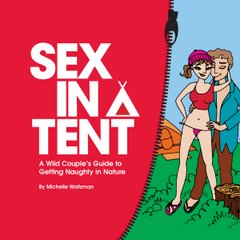
I was a little disappointed that the books featured on the "Book of the Month" list are all by and about male adventurers. Come on - if you're going for the girl market, give us books about women, by women, or at least acknowledging the existence of women! Perhaps I need to send over a copy of "Sex in a Tent" for review ;o)

I'll be keeping an eye on this site to see if it lives up to its potential. Sadly I'm just a bit too lazy to set up such a resource myself. Maybe I'll get around to it eventually! I've already done most of the research - I just need to build the website to put it on.

Meanwhile I hope the Hiking Lady keeps building up her site and gets support from the outdoor women's community.

Friday, August 07, 2009

Sleeping Bags Get Sexier!

Photo: Outdoor Retailer Show 2009 (photographer unknown)

Sleeping bags are design to be warm, light, durable, and compact - but finally someone has gone and specifically designed a sleeping bag that is meant to make it easier to have sex in a tent!
Alite Designs are newcomers in the outdoor gear world, but they are certainly doing their best to make a new niche for themselves. At the recent Outdoor Retailer show (which I had to read about online because I live way too far away to attend) they launched a range of new camping products - among them the "Sexy Hotness" sleeping bag.
What makes it designed for sex? The main feature is a zipper that opens straight up the middle of the bag, exposing your necessary bits without forcing you out of the bag completely. As an added bonus, this means you can walk around wearing the sleeping bag, and they've added reinforced "booties" on the bottom for this purpose.
The bag also has outer pockets where you can keep sexy essentials like condoms, lubricant and tissues, or whatever you like to have on hand. I'm told there's also a sexy Kama Sutra print inside the bag, in case you need inspiration.
The Sexy Hotness bags can be zipped together, or to other sleeping bags with a compatible zipper size, for added space.
I'm not sure how this will catch on. Zipping two regular sleeping bags together still seems like a better option to me, since you can remain completely inside an envelope of warmth and have easy access to each other. But perhaps this one will have appeal to some couples in ways I have not yet imagined!
To see a demo of the "Sexy Hotness" bag, check out the GO Blog video here. It's quite entertaining.

Friday, July 31, 2009

Bears: 1 - Engineers: 0

It was always just a matter of time before bears were found to outsmart "bear proof" food containers. There have been claims of breached food containers for a while now, but recently the New York Times ran an article about a particular black bear who has bested the Bear Vault 500.

The surprising thing is that the bear has not just overpowered the container and ripped it apart. She has instead systematically learned how to undo the locking mechanism to open the vault and get the food out. For anyone who has ever been frustrated by a "childproof" container, you know what an accomplishment this can be!
Bear canisters have become the preferred method of storing food in the Adirondaks in recent years because the clever black bears had figured out that food bangs hung from trees could be accessed by finding the rope and chewing or tearing it down. Now that one bear has figured out the canister, it's only a matter of time before others learn the trick too!

Other types of canister are available which require a screwdriver or a coin to open the locking mechanism, and bears have so far not found any way to get through those ones. (Although I can almost picture one rummaging around the campsite looking for loose change!) So if you are camping in bear country, that might be the way to go for now.

If you're determined to avoid bear encounters altogether you're left with a few choices. First, you could camp during the winter while the bears are hibernating. Second, you could join me down in New Zealand where there aren't any bears in the woods. Or third, you could turn your camping trip into a major detox and not bring any food! (OK, I don't recommend that one.)

Anyway, let this be a lesson to anyone who thought that bears were just big brutes without much intelligence. They are not to be underestimated - and they can climb trees, swim, and outrun you!

Friday, July 24, 2009

Sharing and Caring

Belmont Trig - reachable by foot or mountain bike

Yesterday at work we were discussing the shared pedestrian and cycle lane one of my colleagues uses to walk to work and back. It got me thinking about the number of shared pathways through the wilderness, and whether they work.

More and more it seems there is competition for trails between the hikers and the mountain bikers. Hikers want to keep the wilderness pristine (rut-free) and quiet, with narrow, unassuming tracks. Mountain bikers want enough space to safely enjoy the ride, and get around the non-bikers if necessary. Often this leads to track being designated either for hiking or for biking. Sometimes, though, we are asked to share.

Last weekend G and I were using a shared track in Belmont Regional Park. It was a beautiful, sunny winter day and there were many people out enjoying the break in the weather which thankfully fell on a Sunday. The track is popular because it can be accessed right from the town of Petone. So we shared the track with lots of dog walkers, some trail runners, and a number of mountain bikers.

This particular track follows a stream through a gorge, so at times the track is narrow and drops off to one side, with a steep wall on the other side. It could lead to problems as people try to get past each other, but everyone was very accommodating. If we could step aside to let a cyclist through, that's what we did. If there was a narrow bit coming up, the cyclists would stop if someone was walking through, rather than try to scrape by.

Sharing a track is easy, but it means thinking about what's going on around you, and not just getting lost in your own experience. A daydreaming walker can be infuriating to runners and cyclist, ambling up the middle of a track oblivious to those behind; cyclists enjoying the thrill of a good downhill run can terrorise hikers heading up (or down) the same hill; a poorly behaved dog can give chase to a terrified cyclist.

Shared tracks are a sometimes unfortunate reality, but they're not going away so we all have to learn to get along out there. It's easy to get frustrated, but remember that you're out in the wilderness to relax. It's not a hiker's fault that hiking is slow. It's not a cyclist's fault that their wheels can spray mud; but it is the dog owner's fault if there's poop on the track! (Bring a baggie, it's not that hard!)

So go out there and enjoy the trails however you prefer. But remember to respect you fellow user, and be prepared to break your stride so we can all safely stay on track.

(I feel like a public service announcement. Oh well, sermon over.)

Saturday, July 11, 2009

7 Great Walks in 7 Days!


Mad trail runner Mal Law - photo: 7in7.org.nz

If you've been reading this blog for long, you've heard about New Zealand's "Great Walks" - a collection of 8 hikes and 1 river journey that have been selected for their stunning scenery and diversity as targets for wilderness tourism here in NZ.

I've done a few of the walks myself - The Milford Track, The Routeburn Track, The Tongariro Northern Circuit - and many people both Kiwi and visitors make a point of getting through all of them in their lifetimes.

One man, however, is planning to put us all to shame. He is hoping to become the first person to complete the 7 Great Walks on the two main islands in 7 consecutive days! (He will skip the Rakiura Track on Stewart Island and the Wanganui River Journey.)

The madman's name is Malcolm (Mal) Law, and he is doing this as a fundraiser for Leukaemia and Blood New Zealand. He's attempting to raise $50,000 in total, and he's got some support crew and some sponsors on board to help out.

Is it possible? I can't imagine how, but this guy seems like if anyone can do it he can. He has already done the gruelling Coast-to-Coast race, the Mizone Endurazone Race (the entire length of New Zealand!), The Kaweka Challenge Mountain Marathon etc.

To give you an idea of how big a challenge this is - here are the recommended walking times for the Great Walks he's doing:

Tongariro Northern Circuit - 4 days
Lake Waikaremoana Track - 3-4 days
Heaphy Track - 4-6 days
Abel Tasman Coastal Track- 3-5 days
Routeburn Track - 2-3 days
Milford Track - 3-4 days
Kepler Track - 3-4 days

Total distance: 359.7 km

He's going to attempt all of that in 7 days including transport between the tracks. Good luck Mal! If you want to learn more about his 7 in 7 challenge you can check out the website: http://7in7.org.nz/ He's still looking for sponsorship, and of course donations. The challenge will begin on November 29, 2009 and finish on December 5 at the annual Kepler Challenge.

Saturday, July 04, 2009

Hearing Nature

Kapiti Island nature reserve - full of bird life it sounds like much of New Zealand would have souded before humans arrived.

One of less celebrated joys of getting out into nature is the exposure to a world of sounds that are normally either absent from our lives, or drowned out by the city din.

We tend to focus on the visual aspects of natural beauty. But nobody can deny that a wilderness experience is incomplete without the sound of a rushing river, leaves rustling in the breeze, birds calling at dawn, and unidentifiable shuffling noises outside your tent at night. (OK, maybe the last one you could do without...)

The point is, we tend not to focus on sound, but it does affect our moods and our enjoyment of the outdoors. The lack of traffic noise and ringing phones goes a long way to help us relax and let go of our stress.

Some sounds are getting more difficult to locate in today's world. In an effort to share the world's precious sounds, the BBC are trying to piece together a world audio map. The project is called Save Our Sounds, and they're looking for contributions. Not just the sounds of nature, but also things that define different parts of the world like musical instruments, cooking sounds, laughter, etc.

It's about time we started paying more attention to what we hear around us. So next time you're out hiking or otherwise enjoying your surroundings, close your eyes for a few minutes (please stop hiking to do this, or you may walk off a cliff!) and take note of what you can hear around you.

Wednesday, June 24, 2009

Adventure vs. Nature in Queenstown


Queenstown, New Zealand - naturally beautiful but rarely this peaceful.

First off, sorry for the long absence. I've been busy guiding a group of students and journalists from India around New Zealand for the past couple of weeks. It's been pretty full on, so no time for blogging. But I'm back now. Did you miss me?

One of the highlights of the trip for the visitors was, of course, Queenstown. New Zealand's adventure capital also happens to be one of the most beautiful places in the world. Jagged mountains covered in snow, a stunning blue lake fed by even more stunning glacially fed rivers, and all nestled in the alpine surroundings of the Southern Alps. It's hard to argue with the natural beauty of the place.

However, as Queenstown's popularity has increased, so have the number of "adrenaline" activities that run commercially in it's most beautiful places. The Shotover and Kawarau Rivers are gorgeous settings with towering granite canyons and bright turquoise waters. But the peace you'd expect to find in such a setting is disturbed by the roar of jet boats tearing through at high speed, filled with shrieking tourists.
Other river spots have become the setting for bungy jumps. The historic Kawerau Bridge is picture perfect, but for 20 years has been the home of AJ Hackett Bungy - the first commercial bungy jumping operation in the world.
The mountains themselves are home to ski fields over the winter, and Queenstown is the après ski party capital of the Southern Hemisphere, so there isn't much chance of quiet reflection as you admire the peaks.

So has adventure tourism ruined the natural beauty of Queenstown? Or is it elitist to want to keep such a place in its natural state, knowing that this would prevent most people from having a chance to see it? It's a tough call, and one that has to be made in many areas of natural beauty.

In New Zealand there seems to be a tendency to "sacrifice" the most popular and publicized destinations, making them suitable to large visitor numbers. This is not only true of Queenstown, but also places like Milford Sound, The Tongariro Crossing, and Abel Tasman National Park. By offering easy access and modern facilities, tourists are chanelled into these few chosen areas to appreciate New Zealand nature.

That leaves the rest of the backcountry more or less untouched so that those of us who don't mind a bit of hard work in return for a pristine setting can hold onto some of the amazing scenery for ourselves.

I'm not saying that Queenstown shouldn't be touristy, or that tourism is a bad thing for New Zealand. In fact, I think tourism is necessary and good for New Zealand. But I can't help thinking, whenever I am in Queenstown, that it would have been wonderful to see the place 100 years ago when it was just a little village in the mountains.