Friday, August 07, 2009

Sleeping Bags Get Sexier!

Photo: Outdoor Retailer Show 2009 (photographer unknown)

Sleeping bags are design to be warm, light, durable, and compact - but finally someone has gone and specifically designed a sleeping bag that is meant to make it easier to have sex in a tent!
Alite Designs are newcomers in the outdoor gear world, but they are certainly doing their best to make a new niche for themselves. At the recent Outdoor Retailer show (which I had to read about online because I live way too far away to attend) they launched a range of new camping products - among them the "Sexy Hotness" sleeping bag.
What makes it designed for sex? The main feature is a zipper that opens straight up the middle of the bag, exposing your necessary bits without forcing you out of the bag completely. As an added bonus, this means you can walk around wearing the sleeping bag, and they've added reinforced "booties" on the bottom for this purpose.
The bag also has outer pockets where you can keep sexy essentials like condoms, lubricant and tissues, or whatever you like to have on hand. I'm told there's also a sexy Kama Sutra print inside the bag, in case you need inspiration.
The Sexy Hotness bags can be zipped together, or to other sleeping bags with a compatible zipper size, for added space.
I'm not sure how this will catch on. Zipping two regular sleeping bags together still seems like a better option to me, since you can remain completely inside an envelope of warmth and have easy access to each other. But perhaps this one will have appeal to some couples in ways I have not yet imagined!
To see a demo of the "Sexy Hotness" bag, check out the GO Blog video here. It's quite entertaining.

Friday, July 31, 2009

Bears: 1 - Engineers: 0

It was always just a matter of time before bears were found to outsmart "bear proof" food containers. There have been claims of breached food containers for a while now, but recently the New York Times ran an article about a particular black bear who has bested the Bear Vault 500.

The surprising thing is that the bear has not just overpowered the container and ripped it apart. She has instead systematically learned how to undo the locking mechanism to open the vault and get the food out. For anyone who has ever been frustrated by a "childproof" container, you know what an accomplishment this can be!
Bear canisters have become the preferred method of storing food in the Adirondaks in recent years because the clever black bears had figured out that food bangs hung from trees could be accessed by finding the rope and chewing or tearing it down. Now that one bear has figured out the canister, it's only a matter of time before others learn the trick too!

Other types of canister are available which require a screwdriver or a coin to open the locking mechanism, and bears have so far not found any way to get through those ones. (Although I can almost picture one rummaging around the campsite looking for loose change!) So if you are camping in bear country, that might be the way to go for now.

If you're determined to avoid bear encounters altogether you're left with a few choices. First, you could camp during the winter while the bears are hibernating. Second, you could join me down in New Zealand where there aren't any bears in the woods. Or third, you could turn your camping trip into a major detox and not bring any food! (OK, I don't recommend that one.)

Anyway, let this be a lesson to anyone who thought that bears were just big brutes without much intelligence. They are not to be underestimated - and they can climb trees, swim, and outrun you!

Friday, July 24, 2009

Sharing and Caring

Belmont Trig - reachable by foot or mountain bike

Yesterday at work we were discussing the shared pedestrian and cycle lane one of my colleagues uses to walk to work and back. It got me thinking about the number of shared pathways through the wilderness, and whether they work.

More and more it seems there is competition for trails between the hikers and the mountain bikers. Hikers want to keep the wilderness pristine (rut-free) and quiet, with narrow, unassuming tracks. Mountain bikers want enough space to safely enjoy the ride, and get around the non-bikers if necessary. Often this leads to track being designated either for hiking or for biking. Sometimes, though, we are asked to share.

Last weekend G and I were using a shared track in Belmont Regional Park. It was a beautiful, sunny winter day and there were many people out enjoying the break in the weather which thankfully fell on a Sunday. The track is popular because it can be accessed right from the town of Petone. So we shared the track with lots of dog walkers, some trail runners, and a number of mountain bikers.

This particular track follows a stream through a gorge, so at times the track is narrow and drops off to one side, with a steep wall on the other side. It could lead to problems as people try to get past each other, but everyone was very accommodating. If we could step aside to let a cyclist through, that's what we did. If there was a narrow bit coming up, the cyclists would stop if someone was walking through, rather than try to scrape by.

Sharing a track is easy, but it means thinking about what's going on around you, and not just getting lost in your own experience. A daydreaming walker can be infuriating to runners and cyclist, ambling up the middle of a track oblivious to those behind; cyclists enjoying the thrill of a good downhill run can terrorise hikers heading up (or down) the same hill; a poorly behaved dog can give chase to a terrified cyclist.

Shared tracks are a sometimes unfortunate reality, but they're not going away so we all have to learn to get along out there. It's easy to get frustrated, but remember that you're out in the wilderness to relax. It's not a hiker's fault that hiking is slow. It's not a cyclist's fault that their wheels can spray mud; but it is the dog owner's fault if there's poop on the track! (Bring a baggie, it's not that hard!)

So go out there and enjoy the trails however you prefer. But remember to respect you fellow user, and be prepared to break your stride so we can all safely stay on track.

(I feel like a public service announcement. Oh well, sermon over.)

Saturday, July 11, 2009

7 Great Walks in 7 Days!


Mad trail runner Mal Law - photo: 7in7.org.nz

If you've been reading this blog for long, you've heard about New Zealand's "Great Walks" - a collection of 8 hikes and 1 river journey that have been selected for their stunning scenery and diversity as targets for wilderness tourism here in NZ.

I've done a few of the walks myself - The Milford Track, The Routeburn Track, The Tongariro Northern Circuit - and many people both Kiwi and visitors make a point of getting through all of them in their lifetimes.

One man, however, is planning to put us all to shame. He is hoping to become the first person to complete the 7 Great Walks on the two main islands in 7 consecutive days! (He will skip the Rakiura Track on Stewart Island and the Wanganui River Journey.)

The madman's name is Malcolm (Mal) Law, and he is doing this as a fundraiser for Leukaemia and Blood New Zealand. He's attempting to raise $50,000 in total, and he's got some support crew and some sponsors on board to help out.

Is it possible? I can't imagine how, but this guy seems like if anyone can do it he can. He has already done the gruelling Coast-to-Coast race, the Mizone Endurazone Race (the entire length of New Zealand!), The Kaweka Challenge Mountain Marathon etc.

To give you an idea of how big a challenge this is - here are the recommended walking times for the Great Walks he's doing:

Tongariro Northern Circuit - 4 days
Lake Waikaremoana Track - 3-4 days
Heaphy Track - 4-6 days
Abel Tasman Coastal Track- 3-5 days
Routeburn Track - 2-3 days
Milford Track - 3-4 days
Kepler Track - 3-4 days

Total distance: 359.7 km

He's going to attempt all of that in 7 days including transport between the tracks. Good luck Mal! If you want to learn more about his 7 in 7 challenge you can check out the website: http://7in7.org.nz/ He's still looking for sponsorship, and of course donations. The challenge will begin on November 29, 2009 and finish on December 5 at the annual Kepler Challenge.

Saturday, July 04, 2009

Hearing Nature

Kapiti Island nature reserve - full of bird life it sounds like much of New Zealand would have souded before humans arrived.

One of less celebrated joys of getting out into nature is the exposure to a world of sounds that are normally either absent from our lives, or drowned out by the city din.

We tend to focus on the visual aspects of natural beauty. But nobody can deny that a wilderness experience is incomplete without the sound of a rushing river, leaves rustling in the breeze, birds calling at dawn, and unidentifiable shuffling noises outside your tent at night. (OK, maybe the last one you could do without...)

The point is, we tend not to focus on sound, but it does affect our moods and our enjoyment of the outdoors. The lack of traffic noise and ringing phones goes a long way to help us relax and let go of our stress.

Some sounds are getting more difficult to locate in today's world. In an effort to share the world's precious sounds, the BBC are trying to piece together a world audio map. The project is called Save Our Sounds, and they're looking for contributions. Not just the sounds of nature, but also things that define different parts of the world like musical instruments, cooking sounds, laughter, etc.

It's about time we started paying more attention to what we hear around us. So next time you're out hiking or otherwise enjoying your surroundings, close your eyes for a few minutes (please stop hiking to do this, or you may walk off a cliff!) and take note of what you can hear around you.

Wednesday, June 24, 2009

Adventure vs. Nature in Queenstown


Queenstown, New Zealand - naturally beautiful but rarely this peaceful.

First off, sorry for the long absence. I've been busy guiding a group of students and journalists from India around New Zealand for the past couple of weeks. It's been pretty full on, so no time for blogging. But I'm back now. Did you miss me?

One of the highlights of the trip for the visitors was, of course, Queenstown. New Zealand's adventure capital also happens to be one of the most beautiful places in the world. Jagged mountains covered in snow, a stunning blue lake fed by even more stunning glacially fed rivers, and all nestled in the alpine surroundings of the Southern Alps. It's hard to argue with the natural beauty of the place.

However, as Queenstown's popularity has increased, so have the number of "adrenaline" activities that run commercially in it's most beautiful places. The Shotover and Kawarau Rivers are gorgeous settings with towering granite canyons and bright turquoise waters. But the peace you'd expect to find in such a setting is disturbed by the roar of jet boats tearing through at high speed, filled with shrieking tourists.
Other river spots have become the setting for bungy jumps. The historic Kawerau Bridge is picture perfect, but for 20 years has been the home of AJ Hackett Bungy - the first commercial bungy jumping operation in the world.
The mountains themselves are home to ski fields over the winter, and Queenstown is the après ski party capital of the Southern Hemisphere, so there isn't much chance of quiet reflection as you admire the peaks.

So has adventure tourism ruined the natural beauty of Queenstown? Or is it elitist to want to keep such a place in its natural state, knowing that this would prevent most people from having a chance to see it? It's a tough call, and one that has to be made in many areas of natural beauty.

In New Zealand there seems to be a tendency to "sacrifice" the most popular and publicized destinations, making them suitable to large visitor numbers. This is not only true of Queenstown, but also places like Milford Sound, The Tongariro Crossing, and Abel Tasman National Park. By offering easy access and modern facilities, tourists are chanelled into these few chosen areas to appreciate New Zealand nature.

That leaves the rest of the backcountry more or less untouched so that those of us who don't mind a bit of hard work in return for a pristine setting can hold onto some of the amazing scenery for ourselves.

I'm not saying that Queenstown shouldn't be touristy, or that tourism is a bad thing for New Zealand. In fact, I think tourism is necessary and good for New Zealand. But I can't help thinking, whenever I am in Queenstown, that it would have been wonderful to see the place 100 years ago when it was just a little village in the mountains.

Saturday, May 30, 2009

"Great Rides" Coming to NZ

Photo: Real Adventures

No, it has nothing to do with improving Kiwi sex lives. It's the next step in the evolution of our Prime Minister's "cycling route the length of the country" plan.

That plan was hatched at a summit about employment back in February. While a long-distance cycling route along the whole country had a nice ring to it, the PM backed off when someone painted a $300 million price tag on it.

Instead, we are now looking at $50 million committed to a series of scenic, multi-day cycling routes throughout New Zealand, to be known as the "Great Rides".

This comes off the back of the hugely successful "Great Walks" which have brought hikers from around the world to New Zealand to experience some of our best scenery on foot. The rides will no doubt be aggressively marketed in the same way, and look to keep people in the country for longer, and visiting more parts of the country when they come.

No announcements have been made yet about where these Great Rides will be. Every community or region with a cycling route that could use some upgrades, or a disused rail line that could be converted into a cycling route, is now lobbying for their share of the cash.

It will be fascinating to see what comes of this, and whether New Zealand becomes as well known for cycling holidays as it now is for "tramping".

Monday, May 18, 2009

Cosmo Calling

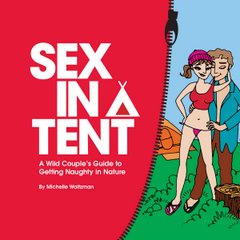
When Sex in a Tent first came out, I was working with the publisher to get as much publicity as possible for it. They sent review copies to tons of magazine hoping to get word out. There was a pretty good response overall, particularly in "outdoors" circles like Sierra Magazine and the Mountain Gazette, but the mainstream didn't really go for it.

However, a year and a half later mainstream women's magazines seem to be waking up to the fact that the outdoors is sexy! A while ago I found myself in the enviable position of being asked by three big magazines to contribute to articles about sex in the great outdoors. I guess it's an idea whose time has come!

The first to hit the newsstands is the June issue of Cosmopolitan (American edition). Sadly my contribution has boiled down to 5 places to get it on outside, and my credit is microscopic - but every little bit helps.

Stay tuned for updates as the other articles (hopefully) make their appearances! I'll be crossing my fingers that all of this talk about outdoor nookie revitalises book sales for the summer.

Saturday, May 16, 2009

More Walking, Less Driving Pt. 2


Footbridge in the Catchpool Valley

I'm back with the promised second post about hikes within an hour's drive from Wellington. Sadly, we didn't manage to squeeze a walk in this weekend because Wellington is kicking up one of its famous gales. Apparently the gusts got up to 140 km/h! Surprisingly, these big blows seem to do very little damage around town, although I suspect the next time we get up into the hills there will be a few extra branches on the ground.

The Catchpool Valley is in the Rimutaka Forest Park, and it's a favourite place for families, older hikers and beginners because the main track, called the Orongorongo Track, is quite flat and very simple to follow. However, there are more challenging routes to take if you head up into the mountains on either side of that main route. Last weekend we walked up to Mt McKerrow and back down another trail. It's about five hours as a round trip, and really gives the legs a good workout especially on the way down. The round trip along Cattle Ridge on the other side is about as long, but not as steep going up or down.
The Catchpool Valley

On Wellington Harbour, opposite the city, is the town of Eastbourne. By heading into the hills behind the town you can spend a few pleasant hours hiking along tracks of various lengths, many of which connect with each other. They also connect with the Catchpool Valley eventually.

View across the Harbour to Wellington

If you cruise up the Hutt Valley, there are additional places to walk. Kaitoke Regional Park is just past the town of Upper Hutt. It's a bit of a push to make it there within an hour of leaving Wellington, but I figured it was close enough to include and we do go there for day walks now and then. Kaitoke is at one end of the popular Southern Crossing of the Tararua Range. But for day walks, we normally walk up a ridge, then either back via another ridge, or a river valley.

An ex-tree in Kaitoke Regional Park
Also up the Hutt Valley is the Rimutaka Rail Trail. This route is doable both on foot and bicycle, and is easy enough for the absolute beginner. It's virtually impossible to get lost, and because it is graded for cycling, there are no tricky steps. In fact, I'm not sure I can really call it a hike, it's more of a walk in the park. However, it does make for a pleasant day out. It's about 5 hours to do the whole crossing over to the Wairarapa side, but this makes for an awkward car shuttle so most walkers do a return trip to the summit (about 3 hours each way.)

An old train tunnel on the Rimutaka Rail Trail

If you're keen to do some walks in and around Wellington, I can recommend the guide book Day Walks of Greater Wellington by Reed Publishing. It covers all of the areas I've mentioned plus a few others, and while you'll still need a proper map it will give you a decent idea of what to expect and driving directions to reach the trailheads.

Saturday, May 02, 2009

More Walking, Less Driving

Eastern Walkway

One of the really nice things about living in Wellington is how close we are to a lot of good hiking areas. Going for a day hike can be a great way to touch base with nature when you can't spare the whole weekend for an overnighter.

I thought I'd dedicate a post to day hikes that take less than an hour to reach by car from our home. Some take as little as five minutes by car (or a 25 minute walk), some take close to an hour. But an hour is about my maximum time for driving to a day hike. Otherwise, you waste half the day in the car.
First there are the Green Belt walkways in Wellington itself. While these are not quite as "wild" as some of the other parks they're still a good option if you want to get outdoors for a couple of hours and still be able to scrub up and meet your friends for dinner.

There are several walkways through the Green Belt. I've done the Southern Walkway from Mt Victoria to Island Bay, the City to Sea Walkway from the Botanic Garden to Island Bay, part of the Eastern Walkway, from the South Coast along the Miramar Peninsula. And I've done part of the Northern Walkway - but not the whole thing - around Mt. Kaukau. Here are some pics:
Southern Walkway (view of Wellington CBD)
City to Sea Walkway

Also close to Wellington is Colonial Knob in Porirua, a three hour loop walk with great views but not much bush.


Belmont Regional Park in the Hutt Valley is another handy spot just 20 minutes' drive from home. There's a bush walk up to Belmont Trig (2.5 hours return) or a loop walk called the Belmont Dress Circle (4 hours) which passes through a lot of farmland and past some old battlements.
Makara Beach offers another decent loop (3 hours) with views of the South Island. I've had good luck with marine wildlife in this area. It's a great place to collect paua shells on the rocky beach, and I've also seen orca just offshore and a little blue penguin one day on the beach.

Makara Beach


Orca off Makara Beach

Whew, well that's a taste of what's in my backyard. Perhaps I'll save the rest for a part 2 covering the Catchpool Valley, Eastbourne and Kaitoke Regional Park. Yes, we're still only looking at options less than an hour's drive from my house.